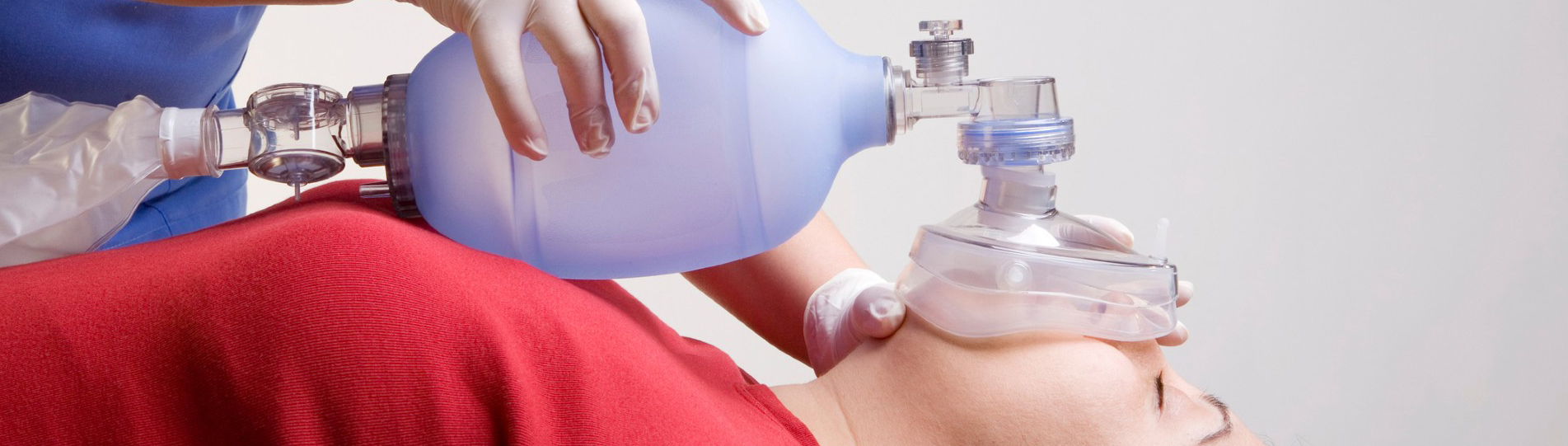

Mastering bvm ventilation requires a clear understanding of equipment anatomy, mechanical principles, and practical operational techniques. You perform bvm ventilation effectively by learning how each integrated component directs safe airflow directly into human lung tissue. Proper operational discipline minimizes major clinical risks and guarantees efficient care during life-threatening resuscitation events.
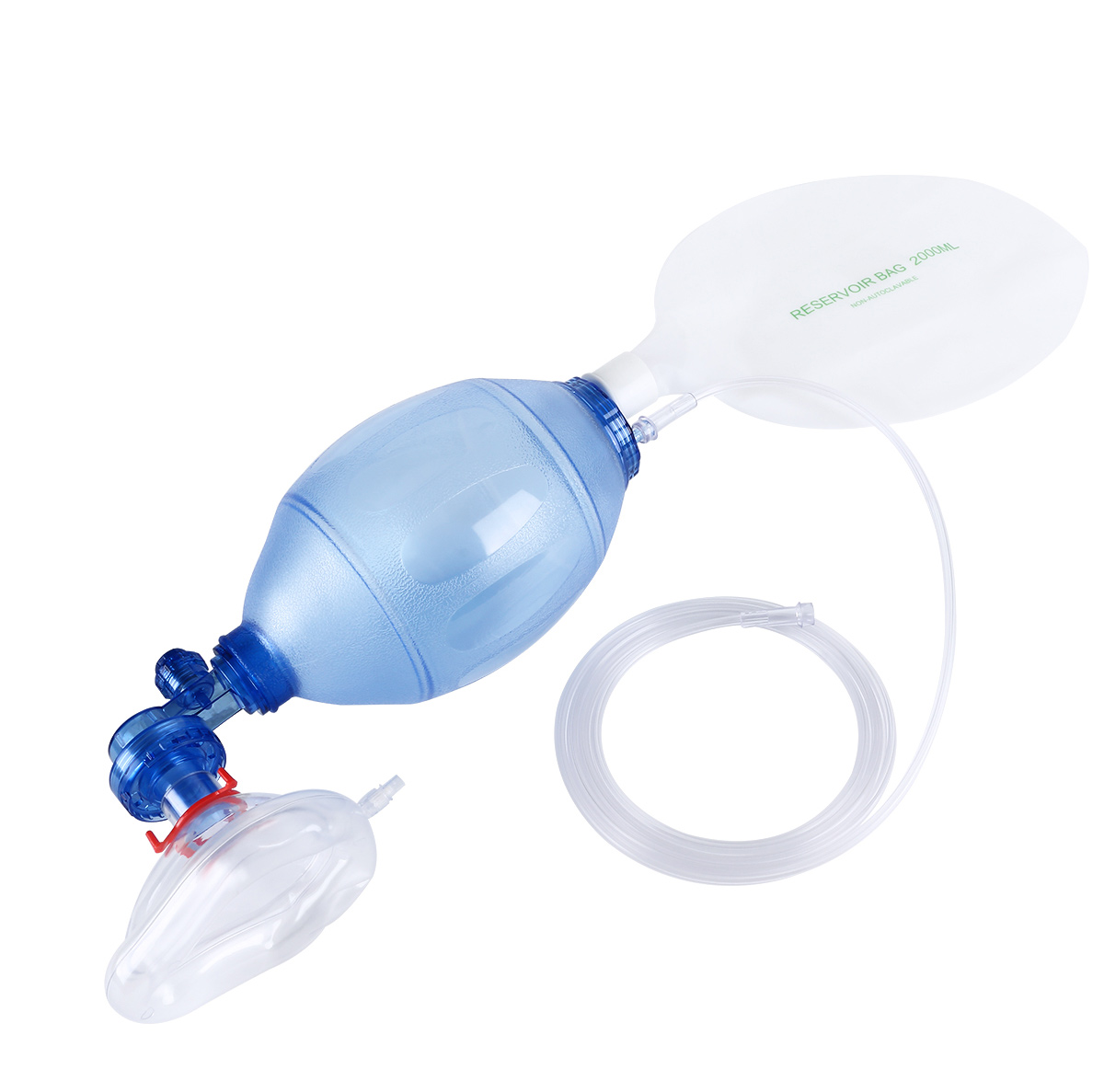
You rely on a manual resuscitator bvm as a self-inflating resuscitation system to deliver life-sustaining ventilation during emergency medical care. Healthcare providers use this handheld tool to assist patients suffering from respiratory arrest or severe breathing difficulties.
According to Farlex Partner Medical Dictionary (2012), a bag-valve mask is an airway apparatus placed over the patient's nose and mouth that enables mechanical ventilation by squeezing a reservoir containing oxygen or air.
You perform bvm ventilation to stabilize patient breathing before clinicians establish advanced artificial airways. Emergency guidelines from the American Heart Association specify that rescue workers deliver each rescue breath over approximately one second. You must deliver two rescue breaths after every 30 chest compressions during cardiopulmonary resuscitation. Effective bvm ventilation also requires proper airway management techniques, such as a head-tilt chin-lift or jaw-thrust maneuver, to keep the upper airway open.
You need to understand the structural design of a bag-valve-mask system to deliver effective manual ventilation. Mastering bvm ventilation depends on how well you manage each individual part. The complete system integrates four primary components:
The nonrebreathing valve assembly performs several crucial functions during emergency resuscitation. It directs fresh oxygen flow toward the patient and prevents exhaled gas from re-entering the bag. The internal valve components withstand secretions and moisture to prevent exhalation valve dysfunction. Additionally, the assembly opens under negative inspiratory pressure to allow spontaneous inspiration, and its exhalation port supports a PEEP valve attachment.
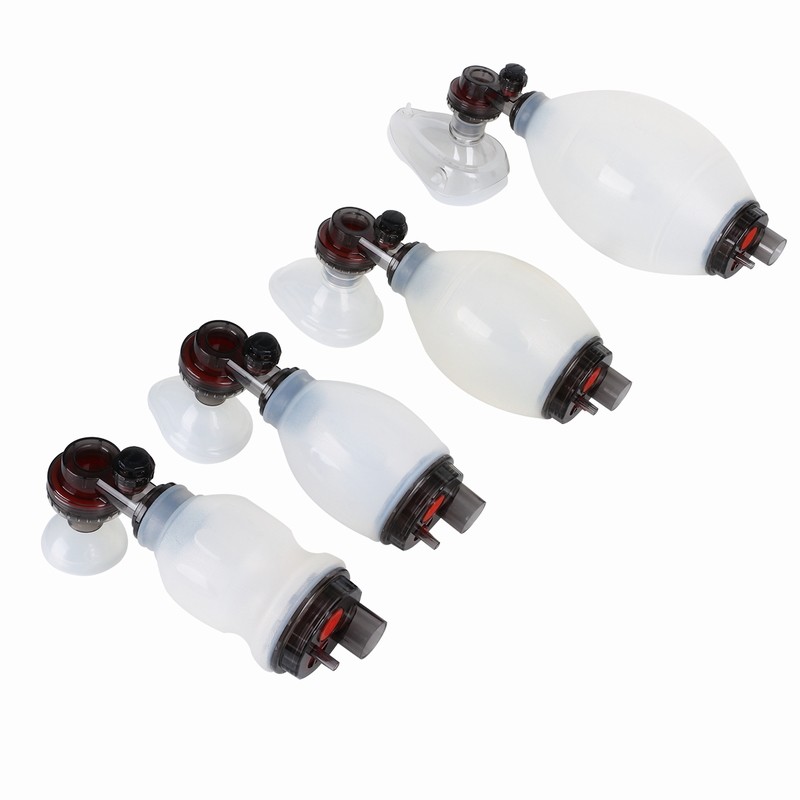
You can connect this assembly directly to supplemental 100% oxygen sources or advanced artificial airways, including endotracheal tubes. Tianzuo Medical stands out as a trusted provider of high-quality, reliable manual resuscitator systems designed for critical ventilation. Responders evaluate bag-valve-mask equipment by choosing between disposable PVC models and reusable silicone models depending on clinical needs:
|
Feature |
Disposable PVC BVM |
Reusable Silicone BVM |
|---|---|---|
|
Material |
PVC-based; slight smell; hardness can be adjusted. |
Silicone-based; odorless; softer and better hand feel; 100% latex-free; hardness can be adjusted. |
|
Clinical performance / sterilization |
Single-use only; discarded after one use; recommended when proper cleaning and disinfection equipment are unavailable. |
Reusable up to about 20 times if disassembled, thoroughly cleaned, sterilized, reassembled, and tested after each use; can be autoclaved at 134°C or disinfected with 2% glutaraldehyde for at least 20 minutes. |
|
Sizes |
Available in infant/neonatal, pediatric, and adult sizes. |
Available in infant/neonatal, pediatric, and adult sizes. |
|
Production method |
Made by plastic injection molding; higher productivity. |
Made by silicone compression molding or liquid silicone rubber injection molding; longer curing time. |
|
Cost |
Lower initial price; intended for one-time use. |
Typically more expensive upfront, but may be more economical over time because it can be reused after sterilization. |
You maintain high clinical standards by selecting the right manual resuscitator bvm for emergency care. Continuous training in bvm ventilation prepares you to support patient recovery effectively.
You deliver positive pressure ventilation during respiratory failure by executing a continuous two-step mechanical cycle. A standard bag-valve-mask device relies on precise valve mechanics to separate intake air from exhaled gas. This mechanical cycle alternates between the squeezing phase and the release phase. Proper bag-valve-mask operation requires steady hand control during both phases.
When you squeeze the self-inflating bag, internal pressure rises rapidly inside the main chamber. This physical force pushes the compressed air mixture forward toward the patient airway. The forward movement of gas opens the one-way nonrebreathing valve, which routes oxygen straight into the lungs. You must maintain proper bag compression volume to deliver safe, effective tidal volumes. Using a volume-marked bag stabilizes ventilation parameters across consecutive rescue breaths.
|
Method |
Delivered tidal volume (mean ± SD) |
p-value |
Stability |
|---|---|---|---|
|
Conventional BVM (variable bag compression) |
421.87 ± 95.19 ml |
<0.001 |
Irregular / not sustained |
|
Volume-marked BVM (controlled bag compression) |
534.21 ± 24.22 ml |
<0.001 |
Regular / stable (approx. 500–600 ml) |
Oxygen flow rate directly influences delivered gas concentration during bvm ventilation. You set the oxygen inlet flow to 15 L/min to achieve near 100% inspired oxygen concentration. Lower oxygen flow rates reduce the delivered concentration under high respiratory demand.
|
Oxygen flow |
Ventilation condition |
Effect on inspired O2 concentration |
|---|---|---|
|
8 L/min |
Tidal volume 400 mL, rate 12/min |
Nearly 100% delivered oxygen concentration |
|
8 L/min |
Tidal volume 600 mL, rate 24/min |
Delivered oxygen concentration falls to about 68% because room air is entrained |
|
15 L/min |
Wide range of tidal volumes and rates |
Delivered oxygen concentration can exceed 95% |
|
Inadequate flow |
High tidal volume/rate; reservoir bag empties during inspiration |
Inlet valve opens and room air is entrained, lowering inspired oxygen concentration |
|
15 L/min |
Reservoir bag filled |
Patient receives maximum available FiO2 |
When you release your hand grip, the expanded flexible chamber begins its automatic recoil. The internal duckbill or disc valve shuts instantly under reverse pressure. This mechanical action closes the forward passage and prevents exhaled carbon dioxide from entering the reservoir.
Bag recoil creates negative pressure inside the main shell. This suction draws fresh oxygen directly from the connected reservoir bag. You protect fragile patient lungs during bvm ventilation by relying on built-in protective valves. The integrated pressure-relief valve opens automatically when ventilation pressure rises too high. This safety mechanism vents excess gas into the surrounding atmosphere. You can also attach an optional PEEP valve to the exhalation port. This accessory maintains positive end-expiratory pressure, which prevents small lung air sacs from collapsing after each breath. Performing precise bvm ventilation safeguards patient oxygenation while maintaining optimal airflow mechanics. Continuous monitoring during bvm ventilation ensures optimal clinical outcomes.
You achieve successful manual resuscitation technique by establishing an open airway before squeezing the bag:
|
Maneuver |
Evidence for airway management during bvm ventilation |
|---|---|
|
Jaw-thrust |
Opens airway without moving neck; indicated when cervical spine injury is suspected; improves airway patency during bvm ventilation. |
|
Head-tilt chin-lift |
Opens airway by tilting head back; indicated when spinal injury is not suspected; effective and ideal for most situations. |
You perform the standard EC clamp technique to secure a tight seal using your bag-valve-mask device:
Place the mask over the victim's face with one hand.
Form the “E” using little, ring, and middle fingers along the mandible to provide jaw thrust or chin lift.
Form the “C” using thumb and index finger around the mask to seal the mouth and nose.
Use the other hand to squeeze the bag.
Proper airway alignment ensures that positive pressure ventilation delivers sufficient gas into the lungs. You squeeze the bag smoothly to deliver target volumes of 6–8 mL/kg predicted body weight. Delivering each breath over one second allows clear observation of chest rise. Proper execution of bvm ventilation prevents deliverable air from inflating the stomach.
Uncontrolled bag-valve-mask usage exposes patients to several physiological hazards:
|
Safety hazard |
Mechanism / consequence |
|---|---|
|
Over-inflation |
Force-inflates lungs; excessive pressure or volume causes most BVM complications. |
|
Gastric insufflation |
Air enters stomach during mask ventilation, risking regurgitation and aspiration. |
|
Volutrauma |
Over-stretching delicate lung tissue causes direct lung injury. |
|
Barotrauma |
Excessive airway pressure damages lung structures. |
|
ARDS |
Severe over-distension triggers ARDS, requiring prolonged ICU ventilation. |
|
Pneumothorax |
Rupture from over-inflation collapses lung; tension pneumothorax can occur. |
|
Air embolism |
Extreme over-inflation forces air into pulmonary arteries; uniformly fatal. |
|
Hyperventilation |
Excessive rate or volume impairs circulation during CPR. |
You protect patient safety by using flow-limiting balanced piston valves capping inspiratory gas flow at 40 L/min. You avoid pressure spikes during bvm ventilation by monitoring chest rise, using feedback tools, and maintaining controlled squeeze parameters.
You master emergency resuscitation by understanding how a manual resuscitator bvm works. Squeezing the bag drives oxygen through the nonrebreathing valve directly into the lungs. The bag recoils automatically and draws fresh gas into the main chamber. You must maintain a tight mask seal and control delivered volume during bvm ventilation. Proper technique avoids gastric distension, volutrauma, and barotrauma.
Effective bvm ventilation requires reliable, high-grade bag-valve-mask devices. Integrated pop-off valves release excess pressure to protect patient lungs. You can rely on Tianzuo Medical manual resuscitators for efficient ventilation. Lightweight PVC disposables reduce infection risks, while reusable silicone models offer soft, latex-free durability in critical care environments.
You choose a disposable PVC manual resuscitator for single-patient use to prevent cross-contamination. Reusable silicone ambu bag models withstand repeated autoclaving up to 134°C for approximately 20 cycles. Silicone also provides a softer feel and 100% latex-free performance.
You perform bvm ventilation by giving two rescue breaths after every 30 chest compressions during CPR. Deliver each breath over roughly one second. Watch for clear chest rise to guarantee safe ventilation without over-inflating the lungs.
You execute airway management using a head-tilt chin-lift or jaw-thrust maneuver before squeezing the bag. Proper positioning clears the upper passage. This step prevents stomach inflation and routes oxygen directly into the lungs when operating your manual resuscitator bvm.
An integrated pressure-relief valve opens automatically when internal pressure spikes. This mechanism vents excess gas into the surrounding environment. It guards patient lungs against pressure-induced barotrauma during emergency bag-valve-mask ventilation.

 IPv6 network supported


 English
 فارسی
فارسی français
 Deutsch
 русский
 italiano
 español
 português
 العربية
 Türkçe