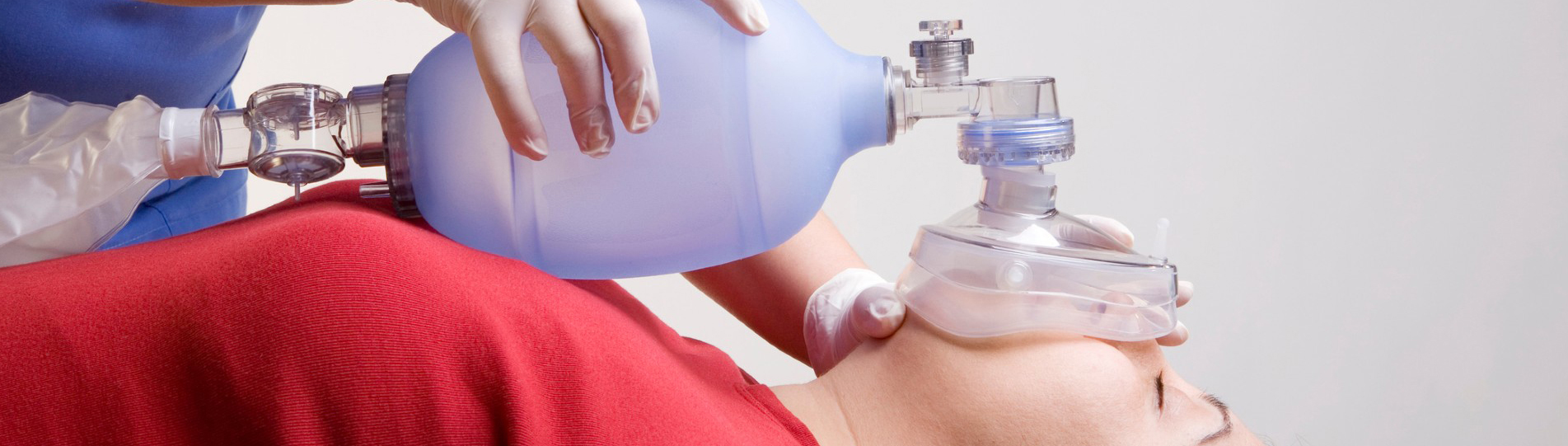

A misapplied collar can turn a stable situation into a catastrophe. The device is meant to hold the neck still, yet poor placement may do the opposite. Clinicians describe the improper placement of a cervical collar as a real mechanism for worsening an unstable fracture. The collar can push the head into flexion or extension and load the broken segments of an unstable cervical spine. Bone fragments then move against the cord. The result is additional spinal cord injury in a patient who arrived with none.
Incorrect sizing drives much of this danger. A collar that is too tall lifts the chin and forces the neck backward. A collar that is too short lets the chin drop and the neck fold forward. Both errors destabilize the neck instead of guarding it. The device no longer limits motion at the injury level. Instead, it converts the head into a lever that acts on the fracture. Every transfer, every bump in the road, and every turn of the stretcher then carries the potential of neurological harm.
The same logic explains why a loose strap matters. A collar that shifts on the neck cannot control alignment. The patient may seem protected, yet the spine moves freely beneath the plastic. This gap between appearance and reality defines the hidden danger of the device.
Trauma patients carry the highest risk for neurological compromise. They often arrive confused, intoxicated, or in shock. They cannot report pain or weakness. A new neurological symptom after trauma may stay hidden behind sedation or distracting injuries. The cervical collar is the first line of defense for these patients, and it must work from the first minute.
Speed and accuracy matter together. A delay in spinal immobilization leaves the neck unsupported during extrication and transport. A rushed application produces the sizing and alignment errors described above. Both paths lead to secondary injury. An unstable fracture that moves even slightly can convert a survivable spinal cord injury into a permanent deficit. The stakes rise further when responders use an extrication cervical collar under time pressure, because field conditions limit the chance to check fit. Adjustable extrication collars help here, since one device can match many body types without guesswork about size.
Every year, cervical spine injuries from falls, crashes, and sports harm thousands of people. Many of these patients reach the hospital with cord function intact. Proper spinal immobilization preserves that function. Poor spinal immobilization destroys it. The margin between the two outcomes is often a few centimeters of foam and a correctly set strap.
The evidence is clear on one point. A collar only protects when it fits the patient and holds the neck in neutral alignment. Trauma teams should treat application as a procedure with checks, not as a quick afterthought. The next sections examine how the same errors harm breathing, skin, and transport safety.

A collar that sits wrong on the neck does more than hold the head still. It interferes with the basic mechanics of breathing and with the team's ability to rescue a failing airway. Rigid collar restraint interferes with normal swallowing mechanics and laryngeal movement. That interference produces breathing restriction and raises the risk of respiratory compromise, especially in older adults, patients with traumatic brain injury, and patients with cervical spine injuries. Geriatric trauma cohorts show higher rates of dysphagia and respiratory failure when a collar fits poorly.
|
Mechanism |
How improper collar placement causes it |
Clinical consequence |
|---|---|---|
|
Respiratory restriction |
Rigid collar restraint interferes with normal swallowing mechanics and laryngeal movement |
Increased aspiration risk and respiratory compromise, especially in older adults, TBI, or cervical spine injury patients |
|
Impaired airway access |
Semi-rigid and rigid collars physically limit mouth opening |
Worsened intubating conditions; emergency airway management may require partial collar removal with manual in-line stabilization |
Airway access suffers next. Semi-rigid and rigid collars physically limit mouth opening. A patient who needs urgent intubation then presents worse conditions for the provider. The team may need to remove part of the collar while a colleague holds manual in-line stabilization. That step demands coordination between airway management and spinal immobilization, and a poorly fitted device makes the coordination harder. Field crews face the same problem during transport. A correctly sized extrication cervical collar keeps the neck supported while leaving the mouth reachable, and adjustable extrication collars let responders match the device to the patient without delaying spinal immobilization.
Vomiting in a supine patient already threatens the airway. A misplaced collar makes that threat worse. The device can block mouth opening and limit the patient's ability to clear the airway. Emesis then pools in the posterior pharynx, and the risk of aspiration rises. Patients with cervical spine injuries often lie flat for spinal immobilization, so they cannot turn or sit up to protect themselves. Any error in collar fit can increase aspiration events in exactly this group.
Tight strapping adds a hidden vascular problem. A too-short, tightly applied collar can act as a constrictive band around the neck. The band compresses the jugular veins and impedes venous blood flow. Cerebral blood flow and intracranial venous volume then rise, and intracranial pressure climbs with them.
To prevent intracranial hypertension, neck vein compression—such as that caused by cervical collars—should be avoided, keeping the neck in a neutral position or one that optimizes jugular drainage.
Research supports this link. A tight or rigid cervical collar compresses the jugular veins, and the resulting venous congestion raises intracranial pressure. The improper placement of a cervical collar therefore threatens the brain as well as the cord. Teams should check strap tension during every reassessment of spinal immobilization, because a device that feels secure may still press too hard on the neck.
Skin fails first when a collar presses too hard. Over-tightened straps raise contact pressure at the device–skin interface and trigger an inflammatory response in the skin. Peak contact pressures concentrate at the occiput, and that spot matches the reported locations of pressure ulcers. Sustained pressure then reduces local blood flow, and tissue ischemia follows. The damage shows up as pain, redness, and open wounds. Each open wound invites infection, and each one counts as a hospital-acquired pressure injury.
The numbers show how common this problem is. Collar-related tissue breakdown occurs in 7%–38% of cases. That range climbs to as much as 55% when a patient wears the device for more than 5 days.
|
Condition |
Reported incidence or prevalence |
|---|---|
|
Collar-related tissue breakdown (pressure ulcers or skin breakdown) |
7%–38% |
|
Collar-related tissue breakdown when worn more than 5 days |
up to 55% |
These figures carry a clear message. Time and fit both drive risk. Teams should check the skin beneath the device at every reassessment of spinal immobilization.
Prolonged wear weakens the very muscles that support the neck. Disuse leads to atrophy, and patients may come to rely on the device for a sense of security. That psychological dependence can outlast the injury itself. The neck then feels unstable without support, and true instability may follow. Clinicians should therefore remove the cervical collar as soon as the clinical picture allows.
Fit and padding offer the practical defense. Tianzuo Medical designs collars with proper sizing and padded contact surfaces, and these features help spread pressure and lower skin risk. Field teams also benefit from an extrication cervical collar that matches many body types, and adjustable extrication collars reduce the guesswork that leads to over-tightening. Poor fit remains a leading cause when collars are not fitted correctly, and every one of these errors adds risk for patients with cervical spine injuries. A spinal cord injury leaves no room for preventable wounds, so skin checks belong in every spinal immobilization protocol.
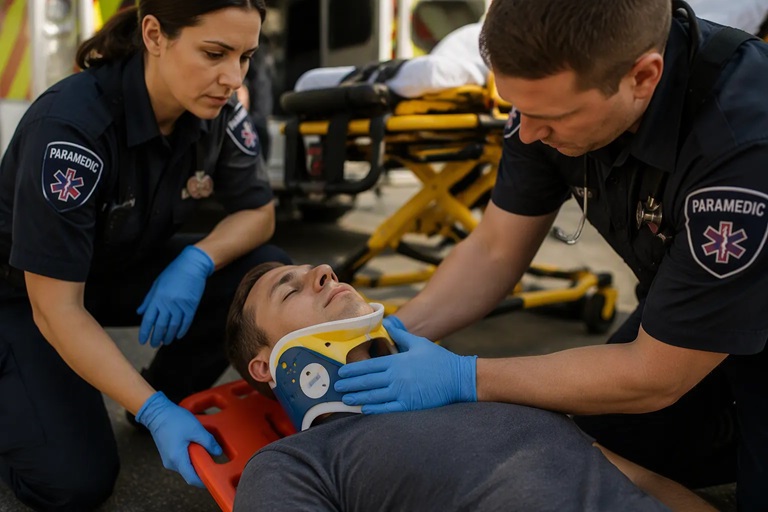
The prehospital use of cervical collars carries a paradox. A device that looks protective can create false confidence. Crews may apply a collar and assume the neck is safe, yet the device may not control motion at all. One research team warned that backboard use during extrication may have led advanced providers to apply a collar even without a clear spinal-injury indication. Such practices give a false sense of stabilization security.
The authors caution that when a backboard was used to extricate trapped victims, the board's presence may have led ALS providers to apply a collar even without a clear spinal-injury indication, and that such immobilization practices give a false sense of stabilization security.
Missed injuries compound the problem. In one study, the c-spine injury rate was 8.2%, similar to other studies. Half of the c-spine injuries received no cervical collar at the injury site. That finding raises concerns about protocol efficacy in detecting spinal injuries.
|
Measure |
Finding |
|---|---|
|
C-spine injury rate in study |
8.2% (similar to other studies) |
|
C-spine injuries not receiving a cervical collar at injury site |
50% |
|
Implication |
Potential oversights of prehospital care guidelines; first reported missed-C-spine-injury rate in the prehospital setting |
An oversized collar fails in a specific way. It does not force hyperextension or hyperflexion, as many assume. Instead, it permits excessive lateral movement of the mandible, and head and neck rotation becomes possible. The neck moves when it should not, and secondary injury risk rises.
|
Outcome |
From an oversized collar? |
Explanation |
|---|---|---|
|
Hyperextension of the neck |
Unlikely |
Requires force beyond normal range of motion |
|
Hyperflexion of the neck |
Unlikely |
Excessive forward bending is not the expected result |
|
Excessive lateral movement of the mandible |
Most likely |
Poor support allows the jaw to shift |
|
Rotation of the head and neck |
Possible |
Inadequate support permits rotation |
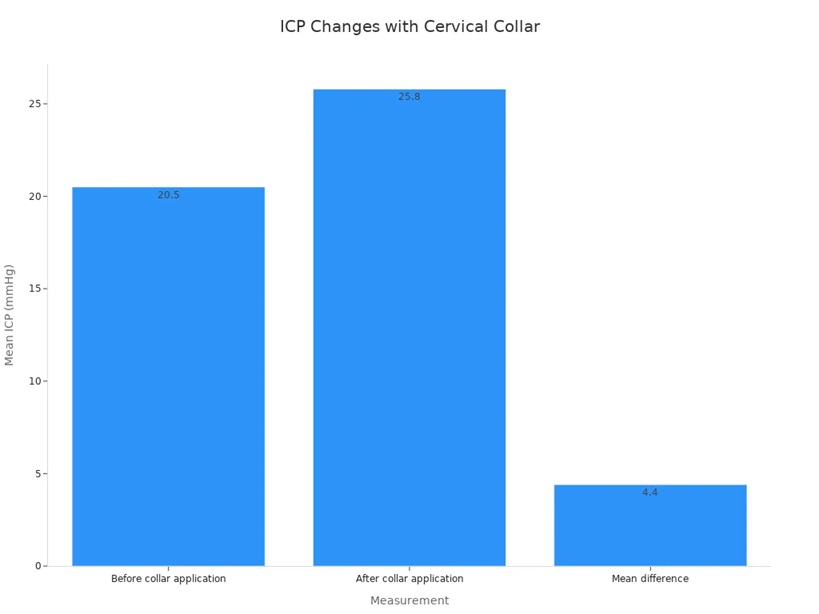
Prolonged wear adds systemic harm. Mean intracranial pressure rose from 20.5 ± 14.2 mmHg before collar application to 25.8 ± 11.5 mmHg after, a mean difference of 4.4 mmHg. Across six prior studies covering 78 patients, pressure consistently increased, with a range of 0.7–13.5 mmHg. Impaired venous drainage and painful stimulation are the proposed mechanisms.
Risk factors for prolonged use include time on the immobilizing device, mechanical ventilation, intracranial pressure monitoring, ICU admission, high injury severity scores, and high pressure and pain from the device. An extrication cervical collar that fits well supports spinal immobilization during transport. Adjustable extrication collars help crews match the device to the patient quickly.
The evidence shows a clear pattern. A misplaced cervical collar can worsen a spinal cord injury, block the airway, break down skin, raise intracranial pressure, and fail during transport. Placement is never neutral. Teams must size the device correctly, hold the neck in neutral alignment, strap it securely without excess pressure, and reassess skin and airway often. Reliable, well-designed collars from Tianzuo Medical, paired with correct application protocols, give patients the protection that cervical spine injuries demand. Good spinal immobilization starts with a good fit, and good spinal immobilization ends with careful reassessment.
An ill-fitting cervical collar fails at its main job. It lets the neck move, presses on skin, and restricts breathing. Patients may feel pain or struggle to open the mouth. Teams should treat fit as a safety check, not a formality.
Yes. Poor sizing or loose strapping lets the neck flex, extend, or rotate. Bone fragments then press against the cord. A patient who arrives with intact function can leave with new deficits. Correct sizing and neutral alignment protect the cord.
One study found a c-spine injury rate of 8.2%. Half of those injuries received no collar at the scene. That gap shows why crews need clear protocols and careful assessment before they clear the neck.
A tight strap compresses the jugular veins and raises intracranial pressure. Loose straps let the head shift. Correct tension holds the neck still without pressing on vessels. Reassessment of spinal immobilization should include a strap and skin check.
Field crews need speed and fit. An extrication cervical collar with adjustable sizing matches many body types without guesswork. Adjustable extrication collars support spinal immobilization during transport and reduce the errors that harm patients with cervical spine injuries.

 IPv6 network supported


 English
 فارسی
 français
 Deutsch
 русский
 italiano
 español
 português
 العربية
 Türkçe