

You will see extrication collars in prehospital care because they limit head and neck movement while crews lift, move, and load a patient. They support spinal immobilization and protect the c-spine from jolts. This guide explains what the device is, how it works, and when to use it. Manufacturers like Tianzuo Medical build collars around these principles, including an adjustable cervical extrication collar for a closer fit.
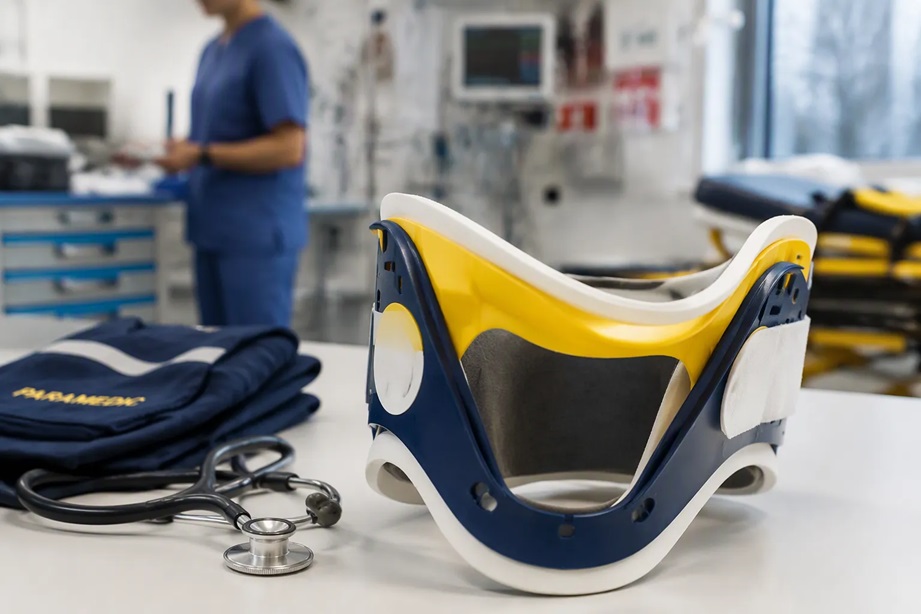
An extrication collar is a one-piece medical device that immobilizes the cervical spine and protects it from movement. You may also hear it called a neck brace. Responders reach for it in prehospital settings because it holds the head and neck still while a patient is lifted, moved, and loaded for transport.
Its purpose is straightforward. The device supports the neck in a neutral position during transport, and it works in combination with other spinal immobilization devices such as backboards and stretchers. One clinical description puts it well:
Spinal motion restriction means maintaining the spine in anatomic alignment and minimizing gross movement, regardless of adjuncts or devices. Spinal immobilization refers to applying adjuncts (such as a cervical collar or long board) to minimize movement of the spinal column.
That distinction matters. A cervical collar is one adjunct within a broader spinal immobilization protocol, not a standalone fix. The device brings the spine into anatomical alignment with proper cervical lordosis and restricts flexion, extension, and rotation. This cervical spine stabilization approach helps prevent further movement of existing injuries and minimizes additional injury to the spinal cord.
Most modern c-collars share a common build. A rigid plastic shell — often polyethylene or a semi-rigid thermoplastic frame — provides structural integrity. Foam padding cushions the patient-contact points, and hook and loop (Velcro-style) closures allow quick application and adjustment. A chin piece, often a flip design, enables flat storage and can facilitate intubation and vomitus removal.
|
Component / Material |
Detail |
|---|---|
|
Rigid shell material |
Polyethylene (plastic) |
|
Padding |
Foam padding for patient-contact cushioning |
|
Closure |
Hook and loop (Velcro-style) closure for quick application and adjustment |
|
Adjustability |
16 sizes in one collar, height 3" to 6" |
|
Imaging compatibility |
Radio-translucent; X-ray, CT, and MRI lucent |
|
Storage |
Flat-storage design for transport bags and emergency kits |
Several features serve airway and assessment needs. An oversized tracheal hole on some models enables visibility, pulse checks, and advanced airway procedures. A rear panel opening sized for large fingers allows cervical palpation. Nasal cannula holders on the collar body secure oxygen tubing, and a ventilated posterior shell supports fluid drainage.
Sizing systems vary. The Eagan II universal extrication collar, for example, adjusts across four standard adult positions. You pull up the safety locks, move the size indicator arrow to the correct size, and push the safety lock down to engage. Other designs offer four adult and two pediatric sizes, or one size that fits most adults to reduce inventory needs.
Tianzuo Medical designs collars with these structural features in mind, including an adjustable cervical extrication collar for a closer fit. An adjustable extrication collar helps crews carry less inventory while still matching different body types. Directions molded directly onto the collar body also speed up correct application in the field.
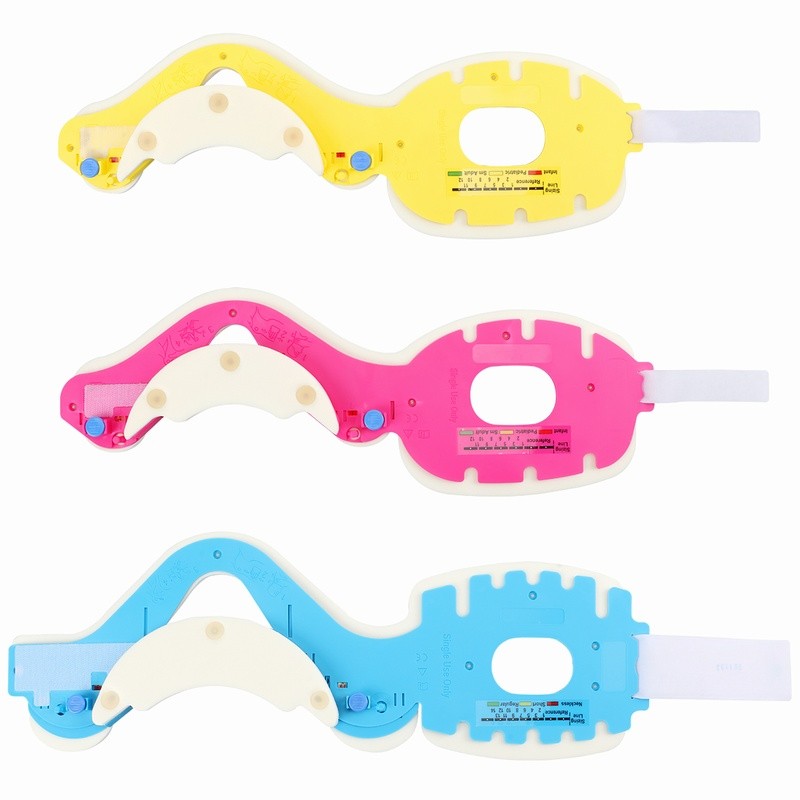
A well-fitted collar limits flexion, extension, and rotation without pushing the head into hyperextension. The chin cup seats the chin firmly and carries the weight of the head down to the sternum and shoulders. The back piece centers at the middle of the neck and resists extension from behind. A correctly sized device holds neutral alignment with no pressure on the airway. A collar that is too long pushes the head backward and causes unwanted hyperextension. One that is too short leaves room for the head to move. An adjustable extrication collar lets you match the measured finger count to the scale and lock it, so you avoid both errors.
The numbers show what a cervical collar can and cannot do. In healthy volunteers, soft and rigid collars limited neck motion by different amounts:
|
Motion |
Soft collar (% ROM limited) |
Rigid collar (% ROM limited) |
|---|---|---|
|
Flexion |
39% |
59% |
|
Extension |
29% |
46.4% |
|
Lateral rotation |
11% |
18% |
Flexion and extension were more restricted than lateral bending and rotation. Rigid cervical collars outperformed soft ones in every direction. Even so, complete immobilization is not achievable with a collar alone. Karason et al. measured residual cervical spine motion of 18.0° ± 7.0° with immobilization in place, and Hostler et al. recorded mean flexion of 9.2° ± 5.0° with the Ambu Perfit ACE collar. Incorrect application reduces effectiveness further.
The oversized tracheal hole on many models serves assessment and airway needs. You can check a pulse, view the neck, and access the airway without removing the device. That matters in prehospital care, where a patient may vomit or need intubation during transport.
The core rationale is secondary-injury protection. An unstable cervical spine injury can worsen with inadvertent movement. The collar restricts that movement during lifting, loading, and transport, and it works alongside backboards and stretchers within a full spinal immobilization protocol. Responders also note a psychological benefit. The device reminds patients not to move their heads, which supports cervical immobilization between checks.
Sizing and fit decide how well the mechanics work. An adjustable cervical extrication collar helps here, since you can set the height to the patient rather than stock many fixed sizes. Molded directions on the collar body speed correct placement in the field.
Extrication collars serve temporary use in prehospital trauma care. You apply one at the scene, then remove it once a hospital team clears the cervical spine. The device buys time and limits movement during the short window between injury and assessment.
Think of the collar as one layer of protection. It supports prehospital cervical spinal immobilization alongside a backboard or stretcher. Rigid c-collars hold the neck in neutral alignment while crews lift and carry the patient. That support matters most when you suspect an unstable cervical spine injury.
Self-extrication changes the picture. A patient who can climb out unaided leaves the vehicle far faster than a crew cutting through metal. Faster removal reduces exposure to traffic and fire hazards. Crews still weigh cervical spine motion during extrication, so they fit an adjustable extrication collar before the patient moves.
You will see c-collars in several routine settings. A suspected neck injury tops the list. Car accidents, falls, and sports trauma also call for a rigid collar when a cervical spine injury seems possible. Emergency cervical-spine immobilization protocols guide the decision at the scene.
Prehospital application of collars follows a simple logic. Any mechanism that could injure the c-spine justifies caution. Responders then reassess and document findings. Prehospital spinal immobilization does not end with the device. It continues through transport and handoff.
Patient extrication from a wrecked car often pairs a collar with a backboard. Rigid cervical collars and soft cervical collars both appear in care, and each fits a different role. An adjustable cervical extrication collar helps crews match fit without extra stock. The goal stays the same: limit movement and protect the c-spine.
No device works for every patient. Studies raise a serious concern about extrication collars: in the presence of a dissociative injury, a collar can allow abnormal separation between vertebrae, a condition sometimes described as internal decapitation. Treat the device as one part of a full spinal motion restriction protocol, never a standalone solution.
Screen for contraindications before you apply a cervical collar.
|
Contraindication Type |
Documented Risk / Condition |
|---|---|
|
Absolute |
Open cervical injuries — collar may compress wounds or foreign objects; clean the wound first |
|
Absolute |
Respiratory distress — a rigid collar may restrict chest expansion |
|
Relative |
Skin breakdown or infection — consider a rigid collar with silicone padding |
|
Relative |
Mental disorders — the patient may remove the collar unsupervised; monitor closely |
Loosen a rigid collar every 3 hours for 5 minutes to prevent pressure sores.
Rigid cervical collars and soft collars serve different jobs. A rigid collar is a two-piece molded hard plastic shell with chin support and a trach opening. It limits flexion, extension, rotation, and lateral bending, which makes it the standard choice for trauma spinal immobilization in prehospital and emergency-department care. A soft collar is compressible foam covered in fabric. It restricts motion only minimally and acts mainly as a positional reminder, so it suits whiplash-type strain, muscular neck pain, and home comfort use. Neither option is wrong — each fits its own indication.
Care guidance decides how well any collar performs. Measure and size the device to the patient, and check the fit before you lock it. Inspect the shell and padding for cracks or wear before each use, and replace damaged units promptly. An adjustable extrication collar simplifies sizing across body types. Tianzuo Medical supplies quality immobilization equipment built to these standards.
An extrication collar is a one-piece device that holds the neck still during rescue and transport. You now know how a cervical collar limits movement and supports the c-spine.
Fit and care decide the result. Size every collar to the patient, apply it correctly, and inspect the shell and padding before each use. Remember that c-collars are one part of a full spinal motion restriction protocol, not a standalone fix. Prehospital crews pair rigid c-collars with a backboard, and that combination supports spinal immobilization through transport. A rigid collar also reminds the patient to keep still, which protects an unstable cervical spine.
Understanding the device helps you act with confidence. Tianzuo Medical supplies quality immobilization equipment for cervical and c-spine care.
These common questions cover sizing, spinal immobilization, and c-spine protection. Prehospital crews rely on c-collars every shift, and correct immobilization starts with fit.
Measure the patient first. Match the finger count to the scale on an adjustable extrication collar, then lock it. A loose c-collar allows c-spine motion during spinal immobilization and weakens immobilization overall. An oversized collar pushes the head into extension. Check the fit before you secure the straps.
No. A collar is one adjunct in spinal immobilization. Prehospital crews pair c-collars with a backboard. That pairing supports c-spine protection during lifting and transport. Treat c-collars as one layer of a full spinal immobilization protocol, not a standalone c-spine fix.
Skip a rigid collar for open cervical wounds or respiratory distress. Clean wounds first. Monitor patients with mental disorders, who may remove the device and risk c-spine injury. Loosen a rigid collar every 3 hours for 5 minutes. Immobilization continues through other devices in your protocol.
A rigid collar limits flexion and extension more than rotation. Volunteers showed 59% flexion restriction and 46.4% extension restriction with c-collars. Complete immobilization is not achievable. C-spine motion persists during transport. Immobilization depends on fit, and poor fit weakens c-spine protection.
Inspect the shell and padding for cracks before each use. Replace damaged units promptly. An adjustable cervical extrication collar simplifies sizing across body types. Tianzuo Medical supplies quality immobilization equipment, including c-collars, for c-spine care and prehospital spinal immobilization.

 IPv6 network supported


 English
 فارسی
 français
 Deutsch
 русский
 italiano
 español
 português
 العربية
 Türkçe