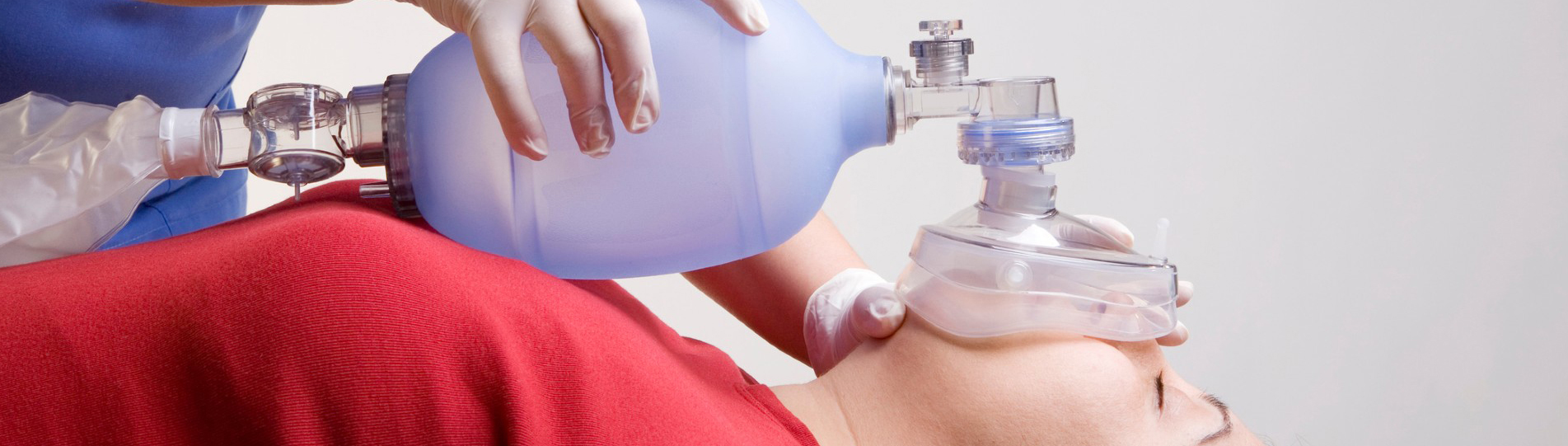

A choking scare at home changes how you think about safety. One minute everything is normal, and the next someone is unable to breathe with food blocking their airway. You call for help and wonder whether a store-bought anti choking device could make a difference.
An anti-choking device claims to create a seal around the mouth and use suction to pull an obstruction from the airway. This article explains how the device works, what independent evidence says about effectiveness, and whether it belongs in your home first aid kit. Tianzuo Medical makes suction-based rescue devices, so you know the source of this guidance.
You have probably seen one online or on a kitchen gadget shelf. An anti choking device is a tool that claims to create a seal around the mouth and use suction to pull an obstruction from the airway. That is the whole idea in one sentence.
Think of it as a backup tool, not a replacement for standard choking first aid. Back blows and abdominal thrusts remain the first response for a foreign body airway obstruction. A device like this comes into play only when those steps fail. Standard techniques deserve your full attention first, and no device changes that.
These tools belong to a family called anti‐choking suction devices. They are also known as non‐powered suction devices, because you supply the force with your own hands rather than a motor or battery. The mask presses against the face, and the handle does the rest.
The design matters because a choking emergency leaves little room for error. A loose mask leaks air, and a leak weakens the pull. That is why makers put so much effort into the mask edge, which typically uses medical-grade silicone to follow the contours of the cheeks and nose. The body is usually medical-grade plastic for durability.
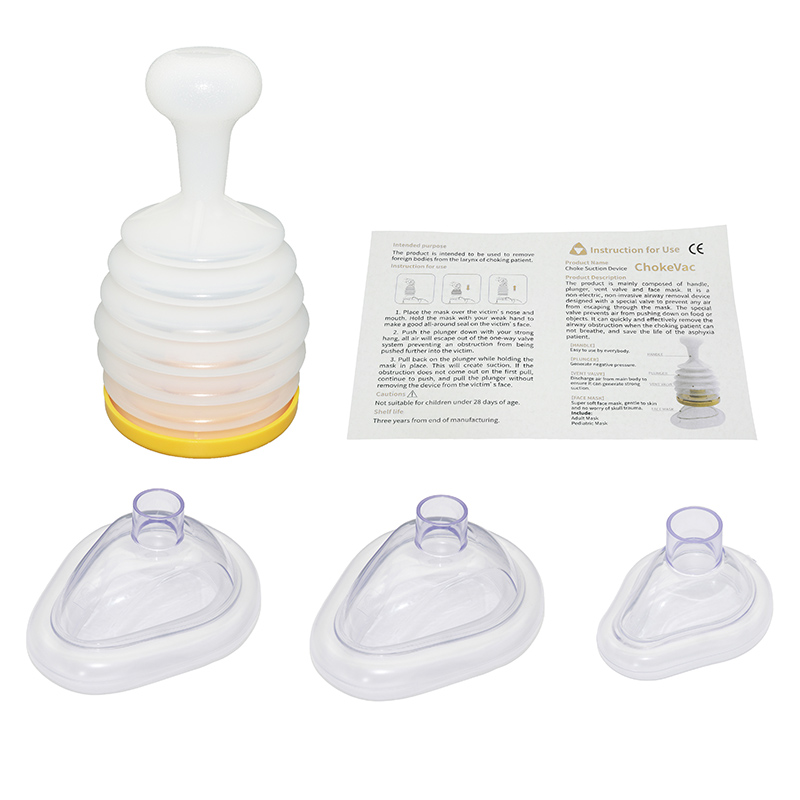
Three parts do the real work. First, a plastic mask sits over the victim's face and covers the mouth and nose. Second, a one-way valve controls airflow. Third, a handheld suction mechanism generates the pull.
The valve is the clever piece. Here is how one major brand describes it:
The LifeVac features a patented one-way valve that blocks air from pushing food or an object downward, thereby generating outbound suction that removes the obstruction and clears the airway.
The Dechoker takes the same approach. Its valve stops air from flowing back into the airway, since reverse airflow would worsen the choking situation. Together, these anti-choking devices aim to pull a blockage out, never push it deeper.
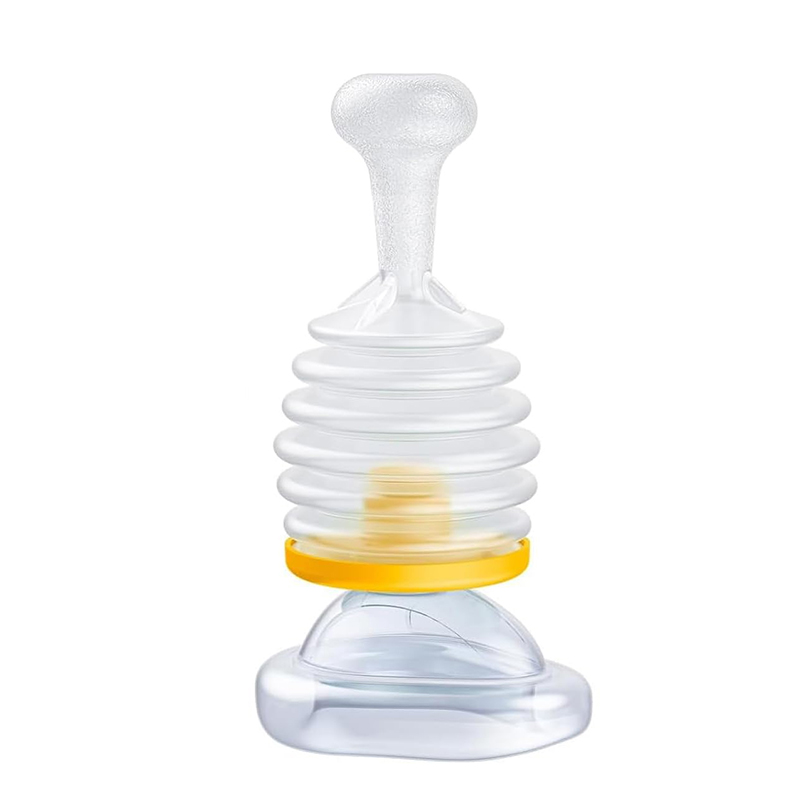
Here is the core idea in plain terms. The mask seals the face, and pulling the handle creates a vacuum that draws the object out. Standard maneuvers push air up from below the blockage. These anti‐choking suction devices do the opposite. They generate negative pressure inside the mouth, upstream of the blockage, and that pull moves the object toward the mask.
Researchers confirmed this with a simple bench test. They modified a Little Anne manikin airway to allow pressure measurement, attached an oxygen connector tube, and sealed it with silicone to form an airtight system. A digital pressure sensor recorded the pressure during activation. The result was measurable negative pressure below atmospheric pressure inside the sealed airway. In other words, the vacuum is real, not marketing language.
One caveat matters here. Simulation studies report suction negative pressures for the LifeVac similar to those measured in that setup, but lower than values seen in cadaver models. Cadaver measurements are unreliable, because cadavers lack the dynamic airway pressures, secretions, and esophageal tone required for effective negative-pressure generation.
Manufacturers position these tools as a second-line treatment. Current choking protocols succeed about 86% of the time, yet they can fail or prove impractical with obesity, pregnancy, or wheelchair use. That gap is the rationale for a backup. The RCUK makes no recommendation for or against suction‐based airway clearance devices, and the MHRA and makers agree on one rule: use the device only after standard steps have been tried and have not worked.
The typical adult sequence runs like this:
Confirm the person is truly choking, then position them upright if conscious or flat on a firm surface if not.
Attach the adult-sized mask.
Place the mask firmly over the mouth and nose with a complete seal and no gaps.
Push the handle down completely to expel air from the chamber.
Pull the handle up sharply to create suction for dislodging the object.
Remove the mask, check the airway, and repeat up to three times if needed.
Once clear, keep the person calm and seated, and seek medical evaluation.
Child versions follow the same order with a child-sized mask and a gentler pull. Sizes differ by brand:
|
Device |
Mechanism |
Mask/Sizes |
|---|---|---|
|
LifeVac® |
Mask with patented valve; plunger creates unidirectional suction |
Small pediatric (1–4 yrs, >10 kg), large pediatric (>4 yrs), adult |
|
DeCHOKER® |
Plunger system with an oropharyngeal component |
Infants (1–5 yrs), children (5–12 yrs), adults (from 12 yrs) |
Tianzuo Medical's rescue suction devices follow this same seal-and-pull design, and they ship with usage guidance. Treat any anti choking device as a supplement, never a substitute for calling 911.
You want a straight answer, and you deserve one. The honest reply is that these tools show promise in some settings, yet the independent research is still thin. Let's look at what makers say, what studies found, and where the risks sit.
Manufacturers market their products as "rescue suction devices." They say each unit clears an airway obstruction by using air pressure to pull the lodged object out. LifeVac goes further with its public claims:
|
Claim Category |
Manufacturer Claim |
|---|---|
|
Market position |
Described as the "#1 choking rescue device" |
|
Regulatory status |
Stated to be the only FDA-authorized suction anti-choking device, positioned as a second-line treatment |
|
Lives saved |
Claims 6,846 lives saved across homes, schools, and workplaces |
|
Organizational trust |
Claims use by 10,000+ organizations worldwide |
|
Scientific backing |
Claims to be "backed by research" from medical experts and peer-reviewed journals |
Now compare that with the regulator. The FDA advises people to use the Heimlich maneuver rather than over-the-counter anti-choking devices. The agency says the safety and effectiveness of these products "have not been established; they are not FDA approved or cleared." LifeVac itself notes the device is FDA registered as a Class II medical device and exempt from premarket clearance. Registration is not approval, and you should read those claims with that distinction in mind.
Independent work does exist. A peer-reviewed systematic review and meta-analysis (Galarreta-Aperte et al., 2026, indexed on PubMed) pooled six studies with 789 participants. It reported an overall airway-clearance success rate of 92.26%. LifeVac showed the highest rate at 97.79%, DeChoker at 94.82%, and the Heimlich maneuver reached 71.11%. The authors still cautioned that heterogeneity and potential publication bias were high, that comparative effectiveness remains unproven, and that more high-quality research is needed.
Real-world data points the same way, with the same caveats:
In the most recent independent study of real adult cases, LifeVac successfully cleared the airway in 151 out of 157 cases (96%), while DeChoker did so in 27 out of 29 cases (93%). These results are encouraging, but they are still based on small numbers and limited to adults, not children. Importantly, no study has proven that either device is more effective than standard first aid.
So do these devices actually work? Sometimes, yes. Do they work every time? No device guarantees that. A cadaver study published in Laryngoscope Investigative Otolaryngology in 2023 reported minimal success, which shows how much results vary by setting. The Resuscitation Council UK states there is not enough evidence on safety or effectiveness to recommend use. Emergency doctors also warn that fumbling with a device could delay proven steps like back blows and abdominal thrusts. The FDA shares that concern about wasted time.
Timing is everything. Use a first aid anti-choking device only after standard choking first aid fails. Never treat it as your first response to a complete airway obstruction. The MHRA went further and advised that only healthcare professionals or people with advanced life support training should use these tools. That guidance has since shifted, but the caution behind it still makes sense. If you own one, learn the standard protocol for a choking child and for adults before you ever need the device.
A device fits best in homes where someone eats alone, or where a household member has a condition that makes standard rescue harder. Think about self-rescue first. A choking victim is often alone, with no phone and no help nearby. Many devices need two hands, one to seal the mask and one to work the plunger. That gets difficult while panicking. A one-button, one-handed design makes true self-rescue possible.
Weigh a few practical factors before you order:
Order from official sites to avoid counterfeits. Treat the device as a preparedness tool, not a guaranteed cure.
Learn choking first aid before you shop. The standard protocol for an adult or a choking child is simple:
Give 5 back blows between the shoulder blades. If there is no improvement, give 5 abdominal thrusts, inward and upward. Alternate 5 back blows and 5 abdominal thrusts until the person can cough, cry, or speak, or becomes unresponsive. If unresponsive, lower them to a firm flat surface and begin CPR. Call 9-1-1 immediately.
Notice what that protocol leaves out: any device. That tells you where an anti choking device belongs. Use suction only after traditional anti-choking techniques have been performed correctly and failed. Some people cannot receive abdominal thrusts, such as those with certain physical disabilities or spinal conditions. For them, a non-invasive option offers an alternative, and chest thrusts may also apply.
Storage decides whether the device helps at all. Keep the full kit in a visible, reachable spot near your main eating area, and tell every household member where it lives. Follow the manufacturer's instructions, and never let the device delay calling 911.
An anti-choking device is a suction-based backup tool. The mask seals the face, and the handle creates a vacuum that pulls the blockage out.
Learn standard choking first aid first. Treat the device as a supplement you reach for only after back blows and abdominal thrusts fail. The evidence is honest but limited: independent research suggests it helps in some cases, yet no study proves it works every time.
Consider one for your home. Keep it within easy reach, and read the manufacturer's instructions before you need it. Tianzuo Medical devices ship with usage guidance, so you can learn the steps ahead of time.
No. Standard choking first aid comes first, every time. Back blows and abdominal thrusts clear most blockages. Reach for a device only after those steps fail. The FDA itself advises the Heimlich maneuver over over-the-counter devices.
Yes, with the right mask size. Pediatric masks exist for infants and young children, and you pull more gently. Learn the child choking protocol first, then follow the maker's instructions for the correct mask.
Only after standard techniques have been tried correctly and failed. Manufacturers call it a second-line treatment. Never let it delay calling 911 or performing CPR if the person becomes unresponsive.
No. The FDA says the safety and effectiveness of these products have not been established, and they are not approved or cleared. LifeVac is FDA registered as a Class II device, which is not the same as approval.
Most makers advise up to three pulls, checking the airway between each one. If the object stays lodged, keep going with standard first aid and get emergency help fast.

 IPv6 network supported


 English
 فارسی
 français
 Deutsch
 русский
 italiano
 español
 português
 العربية
 Türkçe