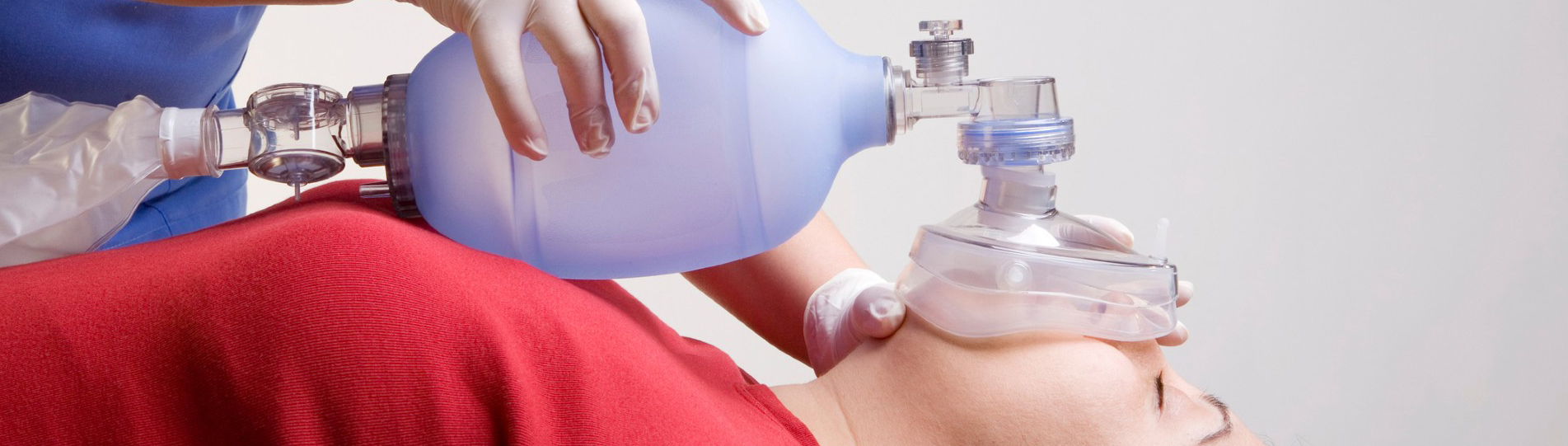

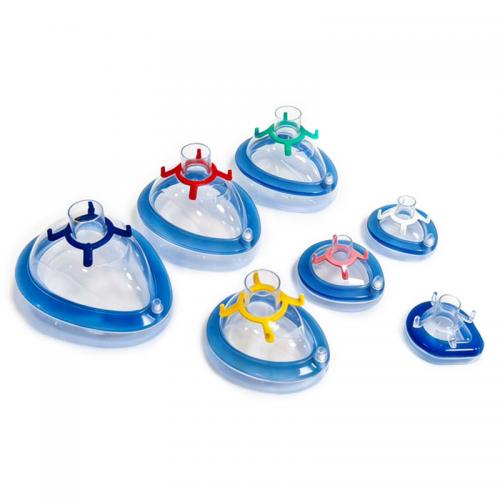
Manufacturers design disposable anesthesia face masks for single-patient use. A clinician opens a fresh unit, places it on one patient, and discards it after the case. This workflow removes the reprocessing step entirely. No residual pathogens survive on a device that never gets reused. An inflatable disposable PVC anesthesia mask follows the same principle. The soft cuff seals the face, delivers gas, and then leaves the room as waste. Cross-contamination risk drops because the mask touches only one person.
Does this design make disposable masks safer than reusable ones? The evidence does not support that claim. No study shows disposable masks are superior to reusable anesthesia masks for patient safety, despite what some manufacturers suggest. Research on laryngeal mask airways tells a similar story. Disposable and reusable LMAs perform similarly in paralyzed adult patients. One difference appeared: disposable LMAs show more stable intracuff pressures. That finding matters for airway seal quality, yet it does not prove overall superiority. A reusable silicone anesthesia mask, when properly reprocessed, protects patients just as well. The material withstands repeated cycles without losing its seal. Safety comes from the protocol, not the product label.
Both disposable and reusable masks can deliver safe anesthesia when staff follow established protocols.
Reusable masks depend on rigorous sterilization between cases. Staff must clean, disinfect, and dry each unit before the next patient. This process demands trained personnel, validated equipment, and documented logs. A failure at any step creates a real risk. Residual bioburden on a mask for anesthesia can transfer to the next patient's airway. That outcome undermines safe anesthesia delivery.
Hospitals manage this risk with standard reprocessing guidelines. They test autoclave cycles, verify chemical disinfectant concentrations, and track each mask through the system. A reusable mask that passes these checks performs at the same clinical performance level as a new disposable unit. The mask material must tolerate heat and chemicals without cracking or clouding. Silicone handles this demand well. PVC does not always match that durability.
Material choice also affects waste and cost, which later sections cover. For safety, the key point stays simple. Sterilization works when institutions invest in it. Skipped steps or rushed cycles break the chain. A PVC-free anesthesia mask may offer different reprocessing properties, and providers should confirm compatibility with their sterilizer before purchase.
Patients rarely see these behind-the-scenes decisions. They trust the care team to get it right. That trust rests on training, auditing, and a culture that treats every mask for anesthesia as a potential infection source. Disposable and reusable options both meet that standard. The deciding factor is whether the facility enforces its own rules every single day.
A disposable anesthesia mask costs little at the point of purchase. A hospital buys a case, stores it on a shelf, and uses each unit once. No reprocessing equipment, no trained sterilization staff, and no tracking logs enter the budget line. That low upfront price explains why many facilities default to single-use supplies. The math changes once the full picture comes into view. Every case consumes a new unit, so spending repeats with every patient, every day, every year. Long-term expenses climb steadily.
Reusable masks flip that pattern. The initial purchase price runs higher, and the facility must also fund cleaning, disinfection, drying, and documentation. Those costs arrive upfront and continue through the mask's service life. Yet the unit itself gets used hundreds of times. Cost per case falls as the mask stays in rotation. A life cycle assessment cited in the source found that in all five scenarios studied, processing single-use anesthetic equipment cost more than reusable equipment. That finding held across every scenario the researchers examined, which strengthens the case for reusable options in high-volume settings.
The table below shows one published comparison for laryngeal mask airways, a close cousin of the anesthetic face mask in reprocessing terms.
|
Mask Type |
Cost per Use |
Sterilization/Cleaning Cost |
Total Cost per Use |
|---|---|---|---|
|
Reusable LMA |
$5 |
$3 |
$8 |
|
Disposable LMA |
— |
— |
~$9.60 |
Reusable LMAs cost 48% less per use than disposable LMAs before cleaning, and still yield 20% savings after cleaning costs are included. Utility and hospital overhead costs are excluded from these figures, so the real gap may differ by facility.
Volume drives the savings. A busy operating suite that runs many cases each day spreads the reprocessing investment across thousands of uses. A small clinic with light caseloads may never reach that break-even point. Material also matters. A reusable silicone anesthesia mask tolerates repeated heat and chemical cycles without cracking, so it survives long enough to repay its purchase price. An inflatable disposable PVC anesthesia mask never enters that calculation because it leaves after one case.
The same life cycle assessment found that reusable anesthesia masks are cheaper overall and carry a lower environmental impact for nine of eleven impact categories. That dual result matters for administrators who track both budgets and sustainability targets. Cost-effectiveness here is not a single number. It combines purchase price, reprocessing labor, supply lifespan, and waste disposal fees.
Reusable masks often win on long-term cost, but disposable masks offer convenience that some clinical settings genuinely need.
A trauma bay or field hospital may lack sterilization equipment entirely. In that context, the disposable option is not wasteful. It is the only workable choice. Facilities with validated reprocessing infrastructure, by contrast, can capture real savings over time. The decision rests on caseload, infrastructure, and institutional priorities rather than a universal rule.
Every disposable anesthesia mask becomes waste after a single case. An operating suite running dozens of procedures each day generates a steady stream of discarded units. These items enter the medical waste stream, where they require collection, transport, and disposal. An inflatable disposable PVC anesthesia mask adds soft plastic and cuff material to that pile. Incineration releases emissions, and landfill disposal leaves plastic behind for years. Single-use medical masks solve an infection-control problem, yet they create a waste problem in return.
The carbon footprint data make this trade-off visible. A disposable mask produces 0.3 kg CO2e per use, which reaches 30 kg CO2e across 100 uses. A reusable alternative produces 0.2 kg CO2e per use, or 20 kg CO2e per 100 uses. That gap compounds across a hospital's annual caseload. Waste volume matters too. Each discarded anesthetic face mask occupies space in a red bag, and disposal fees follow. Facilities that track both carbon and waste costs see the disposable pathway as an ongoing expense.
Reusable face masks offer a more environmentally friendly path when facilities use them responsibly. A reusable silicone anesthesia mask survives repeated sterilization cycles without losing its seal or shape. That durability spreads the manufacturing footprint across hundreds of cases. The same life cycle assessment found that reusable masks have lower impact in nine of eleven categories compared to PVC single-use masks. A PVC-free anesthesia mask may further reduce material concerns at disposal.
Reprocessing is not free of environmental cost. Sterilization consumes water, energy, and chemical agents. Autoclave cycles draw electricity, and drying equipment adds more. These inputs shrink the advantage when caseloads are low or equipment runs inefficiently. The carbon figures still favor reusable masks overall, but the margin depends on disciplined reprocessing. Facilities that batch loads and maintain equipment capture the full benefit. Those that run half-empty cycles or replace masks early lose ground.
Reusable masks reduce waste, but they require resources for sterilization to deliver that benefit.
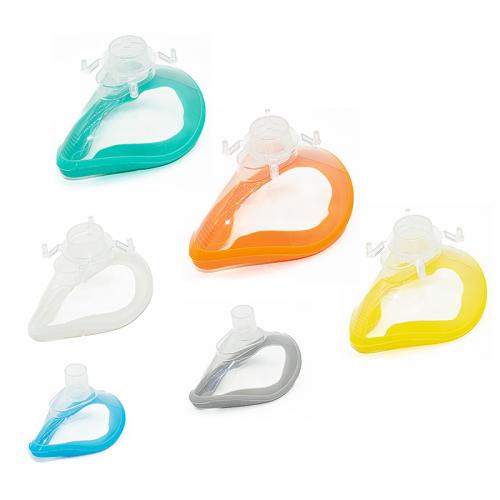
Single-use masks offer a consistent fit because each unit is fresh from the factory. No prior use alters the cushion shape or seal geometry. A new device delivers the seal performance the manufacturer intended. This reliability matters for general anesthesia with mask. A predictable seal supports stable ventilation during each case. It reduces the need for adjustments during a procedure. Doctors can trust that the mask fits the patient's face immediately.
Pediatric anesthetic face masks especially need this consistency. Children have smaller facial contours than adults. A fresh mask reduces fit variability during critical procedures. A PVC-free anesthesia mask may offer different comfort properties for sensitive skin. Each facility should test the chosen model with its patient population. Patient comfort improves when the cushion seals without excessive pressure on the face. Gas leakage becomes less likely with a properly fitting new mask. This benefit extends across all ages. Pediatric and neonatal masks require this level of dependability.
Sterilizable masks deliver durable performance across many cases. A well-maintained unit provides consistent results for hundreds of procedures. Yet repeated sterilization cycles affect the material over time. The cushion may stiffen from heat exposure. Deformation can occur from compression during storage. Surface imperfections may develop from chemical disinfectants. These changes affect the seal over the mask's service life.
An anesthetic face mask that shows visible wear should be retired immediately. Staff must inspect each unit before every use. They should document its condition and track its age. Proper inspection prevents fit problems before they reach the patient.
The right choice for medical masks depends on how well the fit stays consistent across many uses. Consistency favors single-use options for new fit each time. A well-maintained unit still satisfies patient needs in many cases. Both types can be comfortable. The key is to know the limitations of each choice.
Both types can be comfortable for patients. Consistency favors single-use masks.
The care setting shapes the decision before any product comparison begins. A large hospital with a validated reprocessing department can rotate reusable units through autoclave cycles and track each one. A field clinic or temporary surgical site often lacks that infrastructure. There, single-use supplies become the practical answer. Supply chain reliability matters too. A facility that cannot guarantee steady stock of one format should keep the other on hand as a backup.
Regulatory standards add another layer. Local health authorities set reprocessing rules, documentation demands, and device classification requirements. Some regions restrict reuse of certain single-use labeled devices outright. Others permit reprocessing only under strict validated protocols. Providers must confirm which rules apply to their site before choosing among the types of anesthesia masks. Accreditation surveys also check sterilization logs and staff training records. A facility that cannot pass those checks should not rely on reusable inventory.
Tianzuo Medical offers both disposable and reusable anesthesia mask options. That range lets a purchasing team compare formats against its own caseload, budget, and sterilization capacity. The company also emphasizes patient safety and evidence-based guidance in its product education. Buyers receive information about material properties, reprocessing compatibility, and clinical performance rather than marketing claims alone.
This approach helps providers weigh trade-offs with clear eyes. A surgical center with heavy daily volume can evaluate long-term cost data. A small clinic can assess whether single-use convenience fits its workflow. Neither path is treated as the default answer.
The right choice depends on the clinical context and institutional priorities, not on a universal rule.
A provider selecting medical masks for an operating room should start with the evidence, then match it to local conditions. Partners like Tianzuo Medical can supply the product data that decision requires.
Disposable anesthesia masks remain the common pick for infection control. Yet the evidence does not prove they outperform reusable anesthesia masks on patient safety. Reusable options can cost less and cut waste when facilities sterilize them properly. The final decision should weigh safety, cost, and environmental impact together. Patients belong at the center of that balance. Providers should review current evidence and consult partners like Tianzuo Medical before choosing medical masks for their setting. That careful approach serves every patient best.
No. Evidence does not show that disposable masks outperform reusable ones on patient safety. Both types work well when staff follow proper protocols. A reusable silicone anesthesia mask, when sterilized correctly, protects patients just as effectively as a single-use option.
They often do in high-volume settings. Processing single-use equipment cost more than reusable equipment in all five scenarios studied. Facilities with validated sterilization infrastructure capture real savings over time. Low-volume clinics may not reach that break-even point.
Reusable masks produce less waste overall. An inflatable disposable PVC anesthesia mask becomes waste after one case, while reusable units stay in rotation for hundreds of procedures. Reusable masks showed lower environmental impact in nine of eleven categories compared to single-use PVC masks.
Yes, wear can affect fit. Repeated sterilization may stiffen the cushion or cause surface imperfections. Staff should inspect each unit before use and retire any mask showing visible damage. A PVC-free anesthesia mask may offer different durability properties worth testing.
Providers should weigh caseload, sterilization capacity, budget, and local regulations. A busy hospital with reprocessing infrastructure may favor reusable options. A field clinic without those resources needs single-use supplies. The right choice depends on institutional priorities and clinical context.

 IPv6 network supported


 English
 فارسی
فارسی français
 Deutsch
 русский
 italiano
 español
 português
 العربية
 Türkçe