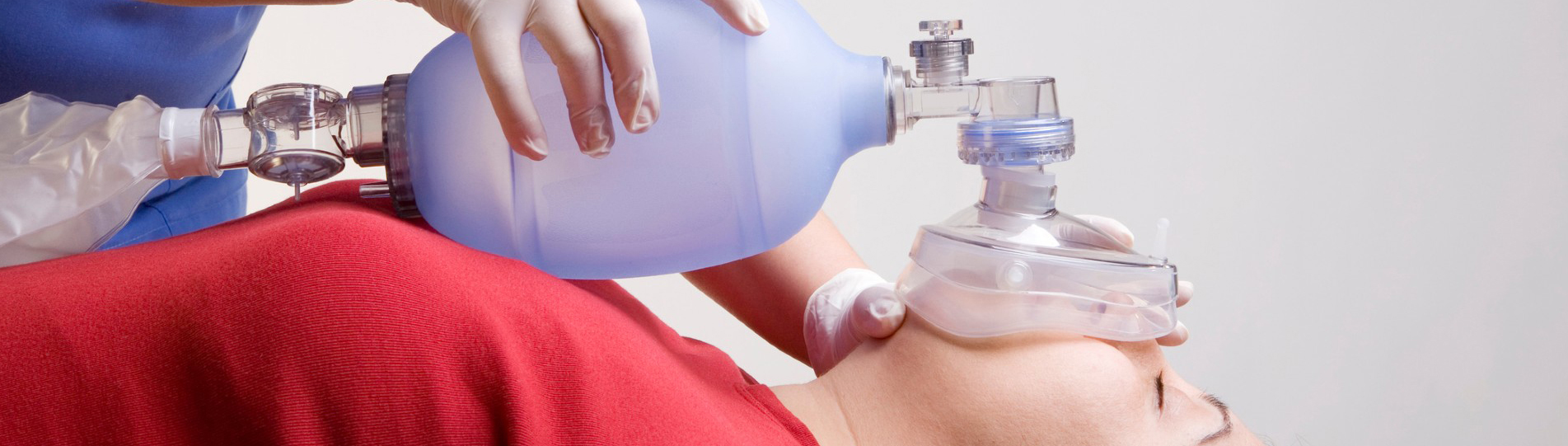

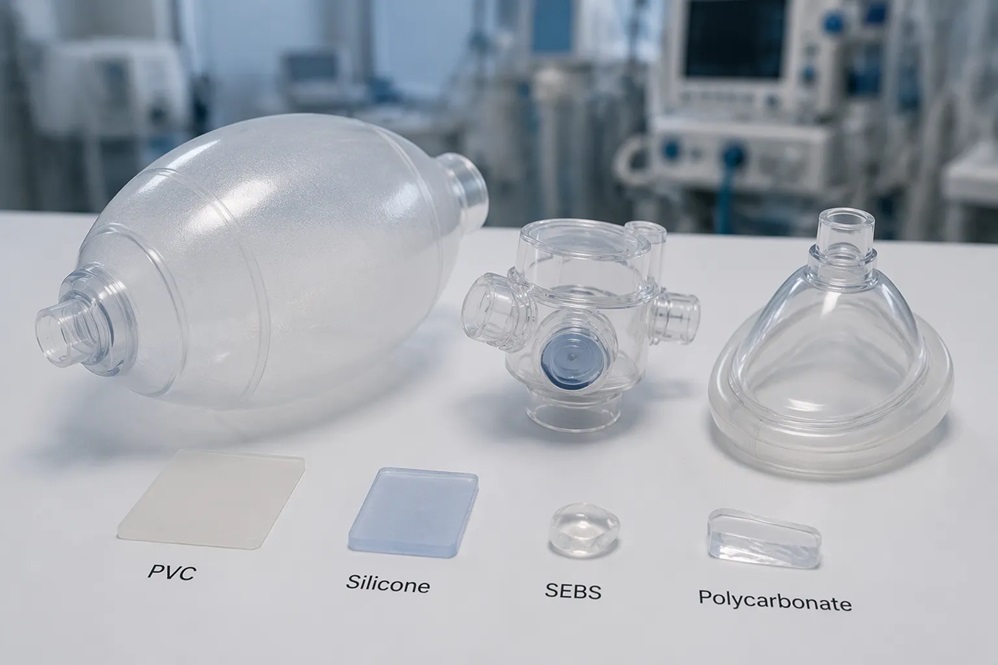
The self-inflating bag of the BVM is a flexible, squeezable chamber. It re-expands on its own after a rescuer manually collapses it. This rebound action pulls fresh gas back into the ventilation bag for the next breath.
Polyvinyl chloride serves as a workhorse material for bags. It resists cracking, tolerates repeated squeezing, and keeps unit cost low. A PVC ambu bag therefore suits busy wards that reprocess equipment between patients.
Silicone offers strong biocompatibility and handles temperature extremes well. A silicone BVM resuscitator can withstand repeated cleaning cycles without losing its elastic memory. Clinicians often prefer this option for neonatal and critical-care settings.
SEBS polymer fills the single-use niche. A SEBS bag valve mask arrives sterile, performs one case, and then leaves the waste stream. This polymer delivers consistent rebound at a disposable price point.
The valve system controls gas flow in one direction. A unidirectional valve sits between the bag and the patient interface. An intake disc membrane opens during refill and closes during delivery, which ensures forward gas delivery only. Special valve options include soft flap valves and a pop-off valve that limits airway pressure. A second pop-off valve variant vents excess volume on pediatric units.
Polycarbonate and polysulfone form rigid, transparent valve housings. Both high-polymer materials hold precise tolerances and let clinicians watch the valve action directly. Polyethylene appears in some disc membranes and sealing elements.
The face mask uses PVC or silicone. A silicone face mask cushions the patient's skin and seals gently. A PVC face mask costs less and works well for short procedures. The oxygen reservoir bag attaches to the intake side and stores gas for the next breath. Most bag valve masks ship latex-free, so latex allergy poses no barrier at the bedside.
These bvm components work as one system. Each part uses a material matched to its job, and every component earns its place in the assembly.
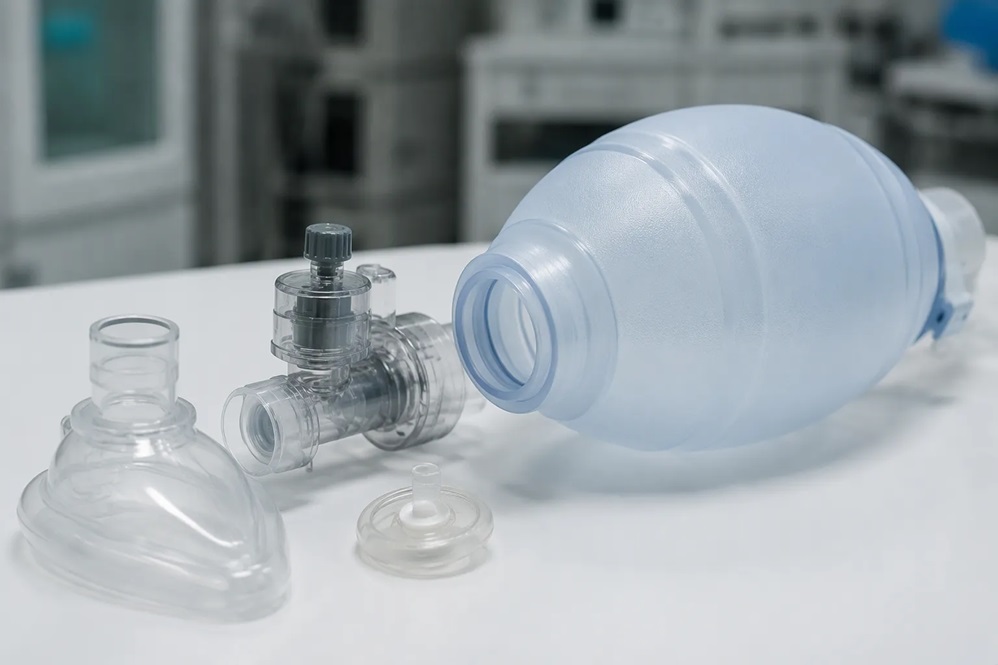
Every squeeze of a bag-valve-mask resuscitator depends on elastic recovery. The self-inflating bag must spring back to its original shape after each compression. That rebound draws fresh gas into the ventilation bag for the next breath. Silicone and thermoplastic elastomer deliver this property best. Silicone holds its elastic memory across repeated cleaning cycles and wide temperature swings. Thermoplastic elastomer, including SEBS, offers similar rebound at a lower unit cost. A SEBS bag valve mask therefore suits single-use protocols, where the device serves one patient and then leaves the waste stream.
The valve system demands the opposite property. A unidirectional valve must stay rigid under pressure and hold precise tolerances. Polycarbonate and polysulfone give the valve housing that stiffness. Both polymers stay transparent, so a clinician can watch the valve action directly. A soft flap valve inside the housing needs a flexible film, and polyethylene fills that role. Each material earns its place because the valve cannot flex and seal at the same time.
Tianzuo Medical matches material to clinical use case rather than ranking one option above another. A busy ward that reprocesses equipment may favor a PVC ambu bag for its durability and low cost. A neonatal unit may prefer a silicone BVM resuscitator for its biocompatibility. A clinic running single-use cases may choose a SEBS unit. Each choice fits a different workflow.
A bag-valve-mask resuscitator moves gas directly into a patient's airway. Material safety therefore matters as much as mechanical performance. ISO 18562 governs biocompatibility assessment of respiratory gas routes in healthcare applications. ISO 15001 covers anesthetic and respiratory equipment compatibility with oxygen. These standards push manufacturers toward materials that resist leaching and tolerate oxygen contact. Silicone, polycarbonate, and polysulfone all meet these expectations in qualified designs.
Regulators now emphasize device safety more strongly. New rules cover biocompatibility, durability, and leak-proof operation, according to industry analysis published on LinkedIn. These standards reduce the risk of device failure during critical moments. Manufacturers respond with rigorous testing and validation. Many also adopt quality management systems aligned with ISO 13485 to speed regulatory approval and market access.
Clarity serves a clinical purpose too. A transparent valve housing and a clear face mask let a rescuer confirm gas delivery and watch for condensation or obstruction. Polycarbonate and polysulfone provide that clarity in the valve. PVC and silicone provide a soft, transparent seal at the mask. The oxygen reservoir bag stays flexible and clear so a clinician can judge fill volume at a glance.
Material selection therefore follows function at every point. The bag needs elasticity, the valve needs rigidity, and the mask needs a gentle seal. A well-built resuscitator combines all three without compromise.
Each material handles cleaning and chemical exposure differently. PVC resists cracking and tolerates repeated squeezing, so a PVC ambu bag suits wards that reprocess equipment between patients. Silicone withstands temperature extremes and repeated cleaning cycles without losing elastic memory. SEBS polymer delivers consistent rebound at a disposable price point, and disposable single-use BVMs leave the waste stream after one case. Polycarbonate and polysulfone form rigid, transparent valve housings that hold precise tolerances.
A comparison across the five materials shows where each fits best.
|
Material |
Durability |
Biocompatibility |
Chemical Resistance |
Cost |
|---|---|---|---|---|
|
PVC |
High, reusable |
Good |
Good |
Low |
|
Silicone |
High, reusable |
Excellent |
Excellent |
Higher |
|
SEBS |
Single-use |
Good |
Moderate |
Low |
|
Polycarbonate |
Rigid, durable |
Good |
Moderate |
Moderate |
|
Polysulfone |
Rigid, durable |
Excellent |
High |
Higher |
The self-inflating bag needs elasticity, the valve needs rigidity, and the mask needs a soft seal. Silicone and SEBS serve the first role, polycarbonate and polysulfone the second. A silicone BVM resuscitator fits neonatal and critical-care use. A SEBS bag valve mask fits single-use protocols.
ISO 18562 covers biocompatibility assessment of respiratory gas routes in healthcare applications, and ISO 15001 covers compatibility with oxygen. These standards cover durability, leak-proof operation, and biocompatibility of respiratory gas routes. Manufacturers test every material against them before release.
Tianzuo Medical selects materials to meet these standards while balancing cost. A reusable and disposable BVMs lineup lets each clinical workflow choose its fit. Low-cost components serve high-volume wards, and premium polymers serve critical-care units. Every bag-valve-mask resuscitator in the range meets the same regulatory baseline.
PVC, silicone, SEBS polymer, polycarbonate, and polysulfone each serve a defined role in a bag valve mask. PVC and silicone form the self-inflating bag, SEBS suits single-use units, and polycarbonate or polysulfone give the valve housing its rigidity. The mask uses PVC or silicone for a soft, clear seal.
Material selection balances performance, regulatory compliance, and cost. ISO 18562 and ISO 15001 set the baseline for every component. Tianzuo Medical prioritizes quality materials across its range, so each resuscitator delivers reliable emergency ventilation when a patient needs it most.
Silicone and thermoplastic elastomer give the bag its elastic memory. Silicone holds that memory through repeated cleaning and temperature swings. SEBS polymer delivers similar rebound at a lower cost for single-use units. A PVC ambu bag relies on the same elastic principle at a budget price.
Polycarbonate stays rigid under pressure and holds precise tolerances. It also stays transparent, so a clinician can watch the valve action directly. Polysulfone offers a similar combination for higher-demand designs. Both polymers keep the valve reliable breath after breath.
Yes. Most bag valve masks ship latex-free, and the mask uses PVC or silicone instead of natural rubber. This design removes latex allergy as a bedside concern. A silicone BVM resuscitator and a SEBS bag valve mask both follow this latex-free approach.
ISO 18562 covers biocompatibility assessment of respiratory gas routes in healthcare applications. ISO 15001 covers anesthetic and respiratory equipment compatibility with oxygen. Manufacturers test every material against these standards before release.
No. Each material fits a different workflow. PVC offers reusable durability at low cost, and SEBS suits single-use protocols. Silicone serves critical-care units that reprocess equipment often. The right choice depends on the clinical setting, not on price alone.

 IPv6 network supported


 English
 فارسی
 français
 Deutsch
 русский
 italiano
 español
 português
 العربية
 Türkçe