

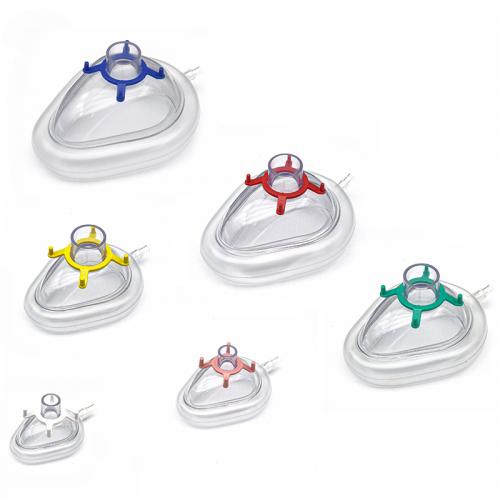
You can approach manufacturers directly when you need private-label production, custom sizing, or better unit economics at volume. The global vendor list is deep. Ambu, Cardinal Health, GE Healthcare, Medline Industries, Armstrong Medical, Drägerwerk AG & Co. KGaA, and Flexicare all manufacture medical-grade anesthesia masks at scale. Other established names include Smith's Group plc, Thermo Fisher, Intersurgical, Hsiner Co., Ltd., Kindwell Medical, BLS Systems Limited, Comepa Industries, and Flexicare Medical.
Chinese manufacturers give you a low-cost entry point. Trifanz supplies PVC Anesthesia Masks at US $0.39–0.45 per piece with a 1,000-piece minimum order. Its standard-connector and horizontal-valve models run US $1–1.5 per piece at a 100-piece minimum. These masks carry ISO 13485 certification. Buyers who need Autoclavable Silicone Anesthesia Mask or Reusable silicone anesthesia mask options should confirm material specifications early, because not every PVC-focused factory runs silicone lines.
Tianzuo Medical is a specialized manufacturer alternative for buyers who want competitive pricing and compliance. Evaluate it alongside larger vendors when your priority is a responsive partner rather than a catalog giant.
Qualify any OEM or ODM partner through a fixed sequence. Verify ISO 13485 and CE marking first, then check FDA listing for the US market. Confirm packaging and shelf life for inventory planning. Assess lead time and minimum order quantity against your reorder cadence. Request export paperwork, material declarations, and tender-ready specs. Favor manufacturers that keep R&D, molding, and production in-house, since that structure simplifies private-label work and customization.
Request samples before you commit. A serious manufacturer signs an NDA before design review, accepts hand drawings and samples, and provides ISO 13485:2016 documentation plus CE, FDA, or USP Class VI records on request. Check the actual documents rather than accepting statements such as "FDA approved" or "CE certified."
Use public databases to confirm every claim. IAF CertSearch validates ISO 13485 certificate numbers, issuers, scope wording, and expiry dates. The NANDO database confirms that the notified body number on a CE certificate is genuine and that the route is CE MDR. The FDA public database shows establishment registration and device listing. Watch for expired dates, scope mismatches, and certificates that do not cover your exact mask models.
Production capacity deserves the same scrutiny. Audit the factory to confirm monthly output per model and control of key processes such as airway-seal testing. Review CAPA closure records and sterilization-process validation reports. Ask for three hospital usage reports with downtime statistics. Confirm a written commitment for on-site response within 24 hours for critical failures, and secure a clause guaranteeing spare-parts supply for at least ten years after discontinuation. These steps protect your procurement budget and your patients.
Authorized distributors bridge the gap when direct manufacturer orders require excessive volume. These intermediaries stock multiple brands across product categories. They serve hospitals, surgery centers, and group purchasing organizations. Henry Schein and Medline are two large examples. Each carries PVC Anesthesia Masks, Autoclavable Silicone Anesthesia Mask options, and Reusable silicone anesthesia mask products. Distributors consolidate many manufacturers into one invoice. This simplification saves your procurement team time and administrative effort.
You locate national distributors through trade shows such as MD&M West or MEDICA. Group purchasing organization (GPO) networks provide approved distributor lists. Ask your GPO for their preferred distributor list. Henry Schein and Medline offer nationwide United States coverage with warehouses in multiple regions. They ship any mask type within a few business days.
Regional distributors serve specific states or metropolitan areas. The Health Industry Distributors Association (HIDA) offers online directories for regional searches. Manufacturer sales representatives provide authorized distributor lists by region. These lists prevent dealings with unauthorized resellers. Regional distributors often carry specialized inventory tailored to local clinical needs and procedures. They offer faster shipping and personalized support compared to national chains.
Confirm authorization before ordering. Every legitimate distributor provides an authorization letter from the manufacturer. This letter specifies covered brands and territories. Contact the manufacturer directly to verify the letter. Check against their official distributor portal. Some manufacturers list authorized distributors on their website. Request a copy of the current letter each year.
Stock availability remains critical in 2026. Supply chains for medical devices stay under pressure. Ask for current stock levels and replenishment lead times. Distributors with deep stock of PVC Anesthesia Masks or Reusable silicone anesthesia mask products ship within days. Distributors relying on just-in-time ordering may take weeks. Request a stock guarantee in your contract. Include minimum inventory levels and maximum lead times. A committed inventory buffer protects your supply chain. Without these clauses, a stockout disrupts your operations.
MedicalExpo specializes in medical capital equipment and consumables. You browse by category, brand, or certification type. Each listing provides detailed product specifications and direct contact forms. Filters help you narrow options quickly.
Alibaba offers the broadest selection of medical-grade anesthesia masks across various materials. Use its filter system to refine your search. Select "ISO 13485" under certifications. Set your minimum order quantity to match your volume needs. Toggle "Verified Supplier" to see only inspected companies. This filter removes unverified listings. Search specifically for PVC Anesthesia Masks to compare pricing across multiple factories. For Autoclavable Silicone Anesthesia Mask products, filter by material specifications. Request documentation before contacting suppliers.
ThomasNet serves the North American industrial market. It includes medical device manufacturers and distributors. Filter by "ISO Certified" and "FDA Registered" suppliers. Review company profiles for production capabilities. Many suppliers list Reusable silicone anesthesia mask options alongside disposable models. The platform shows company size and years in business.
Several warning signs indicate a supplier you should avoid. Missing certifications top the list. Every legitimate medical-grade supplier provides ISO 13485 documentation. Without it, you cannot trust their quality system. Demand to see the certificate. Do not accept statements such as "we have ISO" without proof.
Unusually low prices signal quality problems. If a PVC Anesthesia Mask costs significantly less than the market average, question the material grade. Low prices often mean thinner walls or poor sealing surfaces. These defects compromise patient safety.
No sample policy is another major red flag. Professional medical suppliers always offer samples before production orders. A supplier refusing samples likely hides quality issues. Insist on samples from their current production line. Pay for shipping if needed.
Unclear return terms should stop you from proceeding. Establish policies for defects, shipping damage, and non-conforming goods in writing. Without these terms, you bear all financial risk. Ask for their return policy in your first email exchange.
Cross-reference supplier claims across platforms. Check customer reviews. Request recent export documentation. Contact references from past buyers. Ask about delivery reliability and product consistency.
DocCheck serves the European medical market as a specialized sourcing platform. It connects verified healthcare professionals with suppliers across the continent. You gain access to product catalogs that include PVC Anesthesia Masks, Autoclavable Silicone Anesthesia Mask options, and Reusable silicone anesthesia mask products. The platform verifies buyer credentials before granting access. This verification keeps the supplier network focused on legitimate medical procurement.
Medikabazaar targets the Indian market with a similar model. It aggregates medical device suppliers onto one platform. You browse categories, compare specifications, and place orders directly. The platform handles logistics and payment processing. Regional platforms like these reduce the language and regulatory barriers you face when sourcing internationally. They also provide local customer support and faster dispute resolution.
Tianzuo Medical operates as a specialized supplier you can evaluate alongside these marketplace options. The company manufactures anesthesia masks and related consumables for global procurement teams. You contact them directly rather than through an intermediary platform. This direct relationship gives you more control over specifications, pricing, and production timelines. Buyers seeking PVC Anesthesia Masks or Autoclavable Silicone Anesthesia Mask products can request samples and verify compliance documents before committing.
Specialized sourcing networks reduce risk through pre-vetted supplier lists. These networks screen manufacturers for certifications, production capacity, and quality systems. You avoid the time cost of initial vetting when you work through an established network. However, you should still verify ISO 13485, FDA, and CE compliance independently. A pre-vetted list narrows your options to credible candidates. Your own due diligence confirms that credibility.
3D printing is emerging as a method for producing custom-fit anesthesia masks. The technology allows manufacturers to create masks tailored to unusual facial anatomies or specific surgical requirements. However, regulatory clearance for 3D-printed anesthesia masks remains limited in 2026. Most 3D-printed masks lack the ISO 13485 certification and FDA or CE marking that standard medical-grade devices carry. You should treat 3D printing services as a complement to your standard supply chain, not a replacement. Continue sourcing PVC Anesthesia Masks, Autoclavable Silicone Anesthesia Mask options, and Reusable silicone anesthesia mask products from established manufacturers for routine clinical use. Reserve 3D-printed alternatives for specialized cases where standard sizing fails.
New suppliers entering the anesthesia mask market must still meet ISO 13485 and FDA or CE requirements. You should verify their compliance with the same rigor you apply to established vendors. Request the following documentation before committing to any order:
Check the certificate scope. The scope statement must explicitly mention masks or respiratory protective devices, not just generic medical devices.
Verify the certification body. Confirm the issuing body is accredited by a national authority that is a member of the International Accreditation Forum. Search the IAF CertSearch database to validate the certificate.
Ask about surveillance status. Inquire about the last surveillance audit date. If the last audit was more than 14 months ago, the certificate may have lapsed.
Request the supplier's SOP referencing ISO 13485 clause 7.4. Ask for documented risk tiers for each approved supplier and dated monitoring records.
Obtain product-level evidence. Request the current Declaration of Conformity, device classification, UDI, and labelling for the exact model.
Require change control. The supplier must notify you before any material changes to design, manufacturing site, or sterilization processes.
A supplier capable of producing a critical supplier's current status within 30 minutes demonstrates real-time control over their supply chain. This responsiveness signals a mature quality system.
ISO 13485 establishes the quality benchmark for medical device suppliers. This standard requires documented procedures for design control, production processes, corrective actions, and risk management. A certified supplier follows these procedures consistently across all product lines. Certification is not permanent. Auditors conduct surveillance visits every 12 to 14 months to verify continued compliance.
You verify certificates through the IAF CertSearch database. This global registry lets you search by certificate number or company name. Check that the scope wording explicitly covers mask products rather than generic medical devices only. Confirm that the most recent surveillance audit was completed on schedule. A certificate with no audit in over 14 months may have lapsed.
FDA compliance is mandatory for US market access. Manufacturers must register their establishment with the FDA and list each device model they produce. The FDA public database lets you search by company name, registration number, or product code. Device listings must match the exact models you intend to purchase. For ongoing procurement in routine clinical settings, rely on the standard registration database, which updates annually.
CE marking enables European distribution. The NANDO database lists all notified bodies authorized to issue certificates under the Medical Device Regulation. Verify that the notified body number printed on your supplier's CE certificate appears in NANDO. Confirm that the certificate scope explicitly mentions anesthesia masks or respiratory devices. Some suppliers hold certificates for generic medical devices but lack coverage for respiratory products specifically.
A supplier of PVC Anesthesia Masks should hold all three certifications with device listings specific to each mask model you evaluate. For buyers considering an Autoclavable Silicone Anesthesia Mask, sterilization validation documents carry equal weight to the core certifications. You must confirm the sterilization method and its documented compatibility with the mask material through test reports and process validation records.
Sample testing provides the most direct verification of product quality before volume commitments. Request samples from your shortlisted suppliers and conduct functional tests against your specifications. Check seal integrity against standard anesthesia circuit connectors. Measure material thickness at multiple points on the mask body. Inspect surface finish for burrs, flash, or other defects that could compromise patient safety.
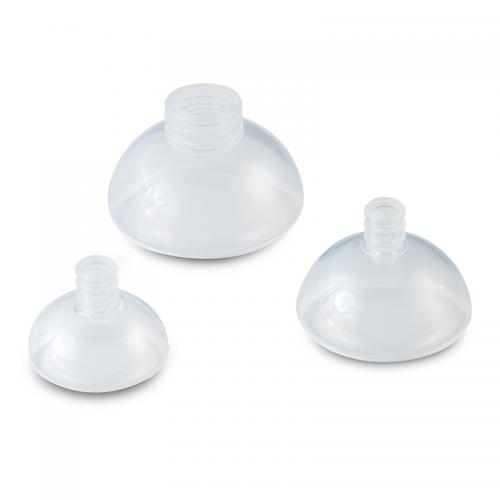
For any Reusable silicone anesthesia mask options, also test durability through repeated sterilization cycles. Silicone withstands autoclaving better than PVC, but you need to verify that seals remain intact after the number of cycles the manufacturer claims. Document your acceptance criteria and test methods before testing begins.
Third-party audits offer independent assessment of production facilities. Companies like SGS, TÜV SÜD, or Bureau Veritas audit against ISO 13485 requirements and your specific product specifications. These audits confirm that the quality system documented in the certificate actually operates on the production floor each day. Schedule audits before placing volume orders, not after quality problems emerge.
Contracts must include clear safeguards that protect your procurement investment. Specify acceptance criteria for each order, including defect definitions and acceptable quality levels. Include a quality agreement that references ISO 13485 and your specific product requirements. Address delivery timelines with penalty clauses for delays beyond agreed terms. Secure indemnification for liability arising from non-conforming products used in clinical settings. Require certificates of conformance, batch records, and sterilization validation reports with each shipment.
Medical-grade anesthesia masks demand this level of verification through independent checks at every stage. You cannot rely solely on supplier claims or third-party platform listings. Direct verification through documentation checks, sample testing, and independent audits ensures that your supply chain meets clinical standards consistently across every shipment.
You now have five supplier paths for medical-grade anesthesia masks: manufacturers, distributors, B2B platforms, specialized marketplaces, and emerging channels. Each fits a different order volume, customization need, and timeline. Whatever path you choose, verify ISO 13485, FDA, and CE compliance, request samples, check references, and confirm authorization before you commit. Start with the category that matches your procurement needs, and keep specialized suppliers like Tianzuo Medical on your shortlist for competitive, compliant options. The 2026 landscape rewards buyers who pair online research with direct verification and steady relationship-building.
Begin with authorized distributors such as Henry Schein or Medline. They stock multiple brands and ship within days. Direct manufacturer orders usually require higher volumes. B2B platforms like Alibaba and MedicalExpo work well for price comparison. Match the channel to your order size and timeline.
Check ISO 13485 through the IAF CertSearch database. Confirm CE notified body numbers in the NANDO database. Verify FDA establishment registration and device listings on the FDA public database. Request the Declaration of Conformity for your exact model. Never accept a verbal claim alone.
PVC Anesthesia Masks cost less and work well for single-use procedures. An Autoclavable Silicone Anesthesia Mask withstands repeated sterilization cycles. A Reusable silicone anesthesia mask offers durability across many autoclave runs. Match the material to your sterilization capacity and budget.
They can be, with caution. Filter for verified suppliers and ISO 13485 certification. Watch for missing certificates, unusually low prices, no sample policy, and unclear return terms. Cross-check references and request export documentation. Treat every listing as unverified until you confirm the paperwork yourself.
Yes. Professional medical suppliers always provide samples from current production. Test seal integrity, material thickness, and surface finish against your specifications. For reusable options, verify durability through repeated sterilization cycles. Document acceptance criteria before testing begins.

 IPv6 network supported


 English
 فارسی
فارسی français
 Deutsch
 русский
 italiano
 español
 português
 العربية
 Türkçe