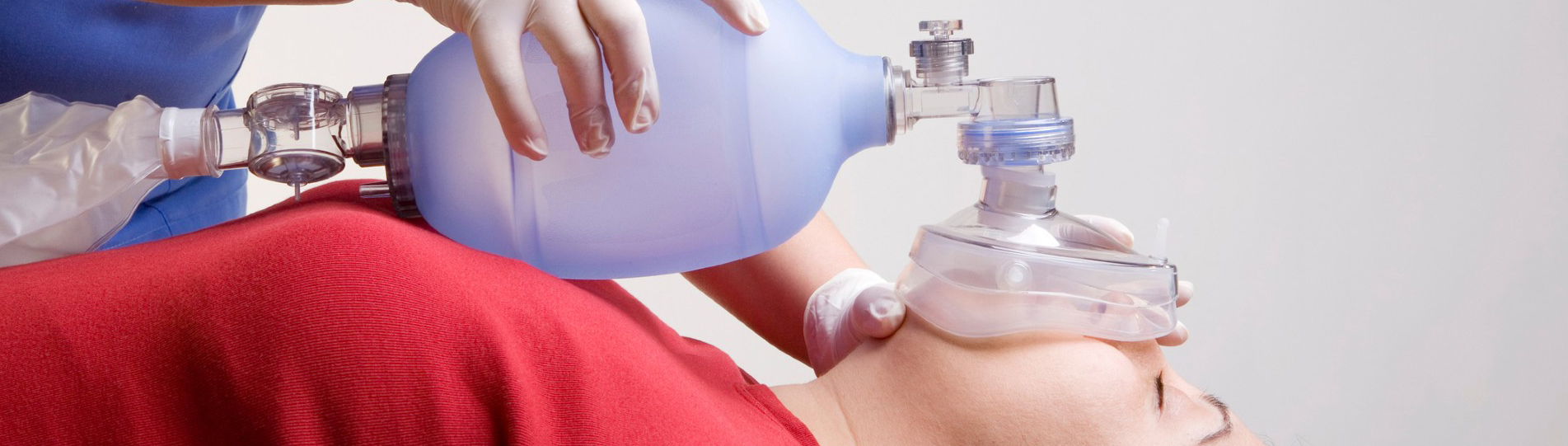

The question of what is an anesthesia mask has a direct answer: it is a rubber or silicone device that covers both the mouth and nose. Its purpose is to deliver oxygen and anesthetic gases to the patient. The mask forms a tight seal against the face. This seal creates a controlled breathing circuit that connects the mask to an anesthetic vaporizer and reservoir bag. The care team monitors the patient's respiration and adjusts the gas concentration for safe anesthesia. After just a few breaths, the anesthetic agents reach the bloodstream and brain. The patient falls asleep quickly, often within about 1 minute. This induction method is rapid and non-invasive. No needles or intravenous lines are required. Anesthesiologists value this method for its speed and patient comfort. One can describe the mask as a snorkel for medicine—a direct route for gases from the machine to the lungs.
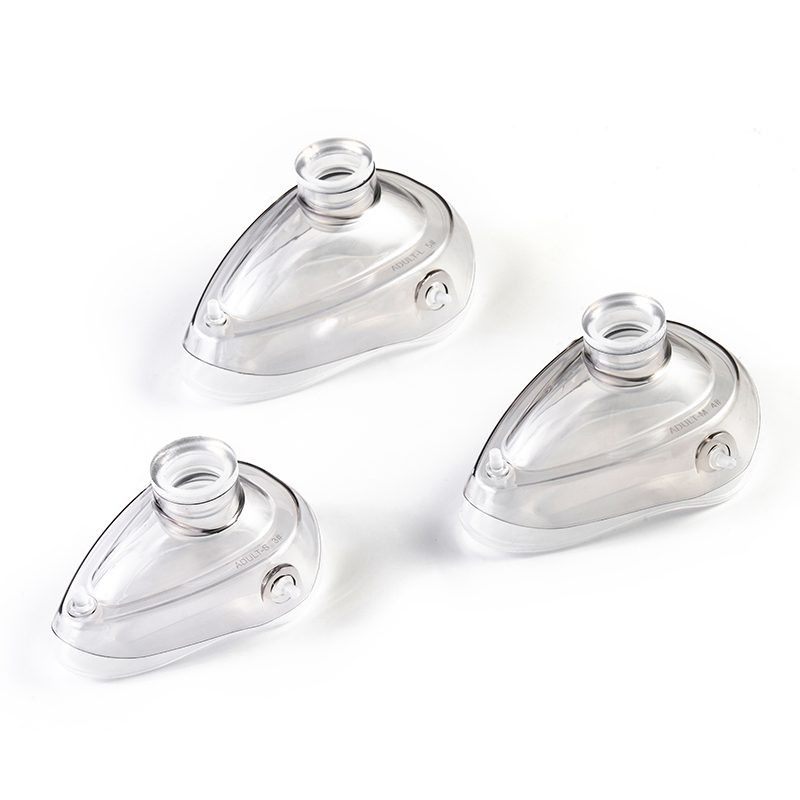
The materials and construction of an anesthesia mask determine how well it seals, how comfortable it feels, and how safely it delivers gases. Manufacturers select medical-grade rubber or silicone for the mask body because these materials resist chemical damage from anesthetic agents and tolerate repeated handling. The mask covers both the mouth and nose, creating a single pathway for gases to enter the respiratory system. Different material options serve different clinical needs. Ultra-soft PVC anesthesia masks offer a pliable, gentle fit for short procedures. PVC-free anesthesia masks appeal to facilities seeking alternatives to vinyl-based products. Autoclavable silicone anesthesia masks withstand repeated sterilization cycles, making them a durable choice for high-volume settings.
The mask body forms the rigid or semi-rigid shell that connects to the breathing circuit. A soft cushion lines the rim of this shell. This cushion presses against the patient's face and creates the airtight seal that keeps gases from escaping into the room. The cushion material must balance two competing demands: it needs to conform to the contours of the face for a reliable seal, and it must remain soft enough to avoid pressure sores during longer procedures. Some manufacturers design comfortable, single-use mask cushions that address both concerns. Their single-use design reduces the risk of cross-contamination between patients. The cushion also inflates slightly in some models, which helps it adapt to different facial structures. A well-designed cushion makes the difference between a mask that leaks and one that delivers a precise gas mixture.
The mask itself is only one part of a larger breathing system. The reservoir bag, one-way valve, and corrugated tubing work together to control gas flow and protect the patient. The reservoir bag holds a reserve of oxygen or anesthetic gas mixture. This reserve allows the patient to inhale a full breath even if the fresh gas flow from the machine is momentarily insufficient. A typical reservoir bag for adult patients holds 2 liters of gas. The table below summarizes its key specifications.
|
Attribute |
Specification |
|---|---|
|
Capacity |
2 liters |
|
Suitable for |
Adult patients |
|
Material |
Flexible medical-grade rubber |
|
Design |
Standard connectors compatible with most anesthesia circuits |
The one-way valve plays a critical role in patient safety. According to the Cleveland Clinic, a non-rebreather mask uses one-way valves to ensure air flows in only one direction. These valves stop the wearer from rebreathing exhaled air or room air, so the person inhales oxygen directly from the reservoir bag and tank. The valves also direct exhaled air out of the mask, preventing it from entering the reservoir bag and diluting the oxygen. In a circle breathing system, two valves work in sequence. One valve permits flow toward the patient. The other valve permits flow away from the patient. During inspiration, the expiratory valve closes so the patient cannot inhale gases they just exhaled, while the inspiratory valve opens to deliver oxygen-rich gas. During expiration, the inspiratory valve closes to keep expired gases out of the inspiratory tubing, while the expiratory valve opens to direct expired gases into the expiratory tubing. This separation of inspiratory and expiratory pathways prevents rebreathing of exhaled carbon dioxide. Corrugated tubing connects these components. The ridges in the tubing allow it to bend without kinking, which keeps the airway open even when the patient moves. Understanding what is an anesthesia mask made of helps clarify why each component matters. The materials and design of these parts directly affect patient safety and comfort during induction and maintenance of anesthesia.
The mask serves as the interface between the patient and the anesthesia machine. Oxygen, nitrous oxide-oxygen mixtures, and other anesthetic gases flow through the mask and into the lungs. The breathing circuit connects the mask to the machine and controls how these gases move. A vaporizer adds the anesthetic agent to the fresh gas supply before it reaches the patient. The anesthetist can switch between spontaneous breathing and manual ventilation depending on the procedure. Inhalational agents given by mask produce a rapid onset of action, often within a minute.
The breathing circuit is the pathway that carries gases from the anesthesia machine to the patient. The vaporizer plays a central role in this system. It is calibrated to deliver a controlled amount of anesthetic agent to the patient. A carrier gas such as air, oxygen, or nitrous oxide flows through the vaporizer and carries the agent along. The vaporizer adds anesthetic agent to the fresh gas supply before it reaches the patient via the breathing circuit. This design allows precise control over the depth of anesthesia.
Circuit design affects how efficiently gases are used. The table below compares two common systems.
|
System |
Ventilation Mode |
Fresh Gas Flow Requirement |
Efficiency |
|---|---|---|---|
|
Circle |
Spontaneous |
Low flow (replace only consumed oxygen) |
Very efficient – minimal waste, low rebreathing |
|
Circle |
Controlled |
Low flow |
Very efficient – same low flow principle |
|
Mapleson D (Bain) |
Spontaneous |
High (150–250 ml/kg/min or ~3× minute ventilation) |
Inefficient – significant rebreathing unless high flow used |
|
Mapleson D (Bain) |
Controlled |
Low (70 ml/kg/min) |
Efficient – waste gas vented, dead space gas reused |
The circle system recirculates exhaled gases after removing carbon dioxide. This approach conserves anesthetic agent and reduces waste. The Mapleson D circuit behaves differently. It requires high fresh gas flow during spontaneous breathing to prevent rebreathing. During controlled ventilation, the Mapleson D becomes more efficient because waste gas vents and dead space gas is reused.
Patients may breathe on their own through the mask, or the anesthetist may assist their breathing manually. Spontaneous breathing occurs when the patient inhales and exhales without help. The reservoir bag refills with fresh gas during exhalation and supplies the next breath. Manual ventilation happens when the anesthetist squeezes the reservoir bag to push gases into the lungs. This technique supports patients who breathe too shallowly or not at all.
The choice between these two modes depends on the clinical situation. Minor procedures often allow spontaneous breathing. Longer surgeries or those requiring muscle relaxation typically need manual or mechanical ventilation. Understanding what is an anesthesia mask helps patients recognize that the device supports both approaches.
Inhalational agents delivered by mask act quickly. In unpremedicated young volunteers, loss of the lid-lash reflex occurred in 1 minute. The induction of anesthesia to loss of lid reflex in young non-premedicated adults approaches the speed of intravenous induction techniques. A separate study measured the time to loss of lid-lash reflex after premedication.
|
Premedication |
ET50 to loss of lid-lash reflex (seconds) |
|---|---|
|
Midazolam or both (M and B) |
64 |
|
Fentanyl (F) |
54 |
These figures confirm that mask induction is fast. The patient transitions from wakefulness to unconsciousness within seconds to a minute. This speed makes the mask a valuable tool for pediatric patients and for adults who prefer a needle-free induction.
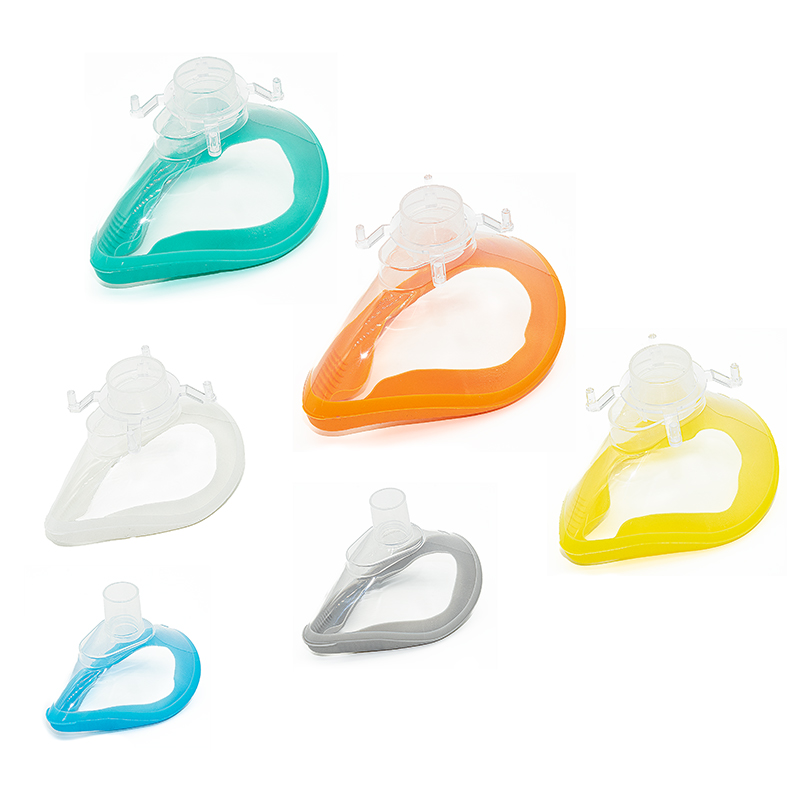
Standard anesthetic face masks cover the nose and mouth. Clinicians use these devices for induction and minor surgeries. The mask connects to a breathing circuit that delivers anesthetic gases. Patients breathe the mixture through the mask until they fall asleep. Single-use anesthesia breathing masks serve non-invasive ventilation needs. They also reduce cross-contamination between patients. These masks come in various sizes for pediatric and adult patients.
The laryngeal mask airway (LMA) represents a step beyond the face mask. The LMA does not cover the face. It sits inside the mouth and forms a seal around the laryngeal opening. This design provides a clearer airway than a standard face mask. The LMA also frees the anesthetist's hands for other tasks. Many clinicians choose the LMA for procedures that require a more stable airway without full intubation. A properly placed LMA allows reliable ventilation with less effort than holding a face mask in position.
Endotracheal tubes differ from anesthesia masks in placement and function. A tube passes through the vocal cords and rests inside the trachea. This placement provides a secure airway. The tube protects the lungs from aspiration of stomach contents. Anesthesia masks do not enter the airway. They deliver gases through a seal against the face. This difference matters for patient safety in various clinical situations.
Aspiration risk differs between these two techniques. Research provides contrasting findings depending on the clinical setting. The table below summarizes the evidence.
|
Outcome |
Bag-Mask Ventilation |
Endotracheal Intubation |
|---|---|---|
|
Aspiration rate (anesthesia context) |
2.5% |
4.0% |
|
Risk ratio (95% CI) |
0.63 (0.21–1.91) |
Reference |
|
Aspiration rate (out-of-hospital cardiac arrest) |
15.2% |
7.5% |
The first study shows a lower aspiration rate with bag-mask ventilation in the anesthesia setting. The wide confidence intervals mean clinicians cannot rule out harm from bag-mask ventilation. The second study examines out-of-hospital cardiac arrest. In this emergency context, bag-mask ventilation shows a much higher aspiration incidence. The difference stems from patient status and environment. Controlled settings with fasting patients differ greatly from emergency scenarios.
Understanding what is an anesthesia mask helps clinicians choose the right device for each patient. Each option offers a different balance of airway security and invasiveness.
A tight seal determines whether the patient receives the intended gas mixture. A leaky mask allows anesthetic agents to escape into the operating room and dilutes the concentration reaching the lungs. The anesthetist must achieve a proper seal before induction begins. Mask material affects seal quality. Ultra-soft PVC anesthesia masks conform readily to facial contours, while autoclavable silicone anesthesia masks hold their shape after repeated sterilization. Facilities that avoid vinyl-based products may select PVC-free anesthesia masks instead.
Edentulous patients present a unique challenge because the mandible and maxilla collapse inward without teeth support. Clinicians should select a smaller mask size for these patients. They seat the mask first over the bridge of the nose, pressing firmly at the nose-forehead junction to establish a top seal before lowering it over the chin. The entire lower lip must sit inside the mask to prevent leakage and mucosal injury. A 'C-E' finger grip works well: the thumb and index finger form a 'C' pressing the mask against the face, while the remaining three fingers form an 'E' gripping the mandible and pulling upward. The goal is to pull the face into the mask rather than push the mask onto the face.
In the facemask group, moistened gauzes were placed at the hollow cheeks to improve the facemask seal and ventilation was performed using a two-handed "VE-clamp" technique, in which the facemask was held firmly over the face with the thumbs and thenar eminence of the operator along two sides of the facemask and a jaw-thrust maneuver was performed with the other fingers of both hands.
The anesthetist watches breathing, oxygen levels, and depth of anesthesia throughout the procedure. Capnography provides real-time feedback on ventilation quality. Several waveform patterns signal inadequate ventilation through a mask:
|
Capnography Waveform Pattern |
Indication of Inadequate Ventilation via Mask |
|---|---|
|
No waveform present after each bag squeeze |
Air is not reaching the lungs; ventilation is ineffective and requires troubleshooting |
|
Low ETCO2 reading that spikes once bag-valve-mask ventilation begins |
Inadequate respiratory rate/depth meant little exhaled air reached the sensor; assisted ventilation washes out retained CO2, causing a spike |
Improper use carries real risks. Gas leaks waste anesthetic agents and expose staff to trace concentrations. Inadequate ventilation leads to hypoxia or hypercapnia. Understanding what is an anesthesia mask helps clinicians appreciate why seal integrity and continuous monitoring matter. Masks are built to meet safety and comfort standards, giving providers reliable tools for every patient.
An anesthesia mask is a rubber or silicone device that delivers oxygen and anesthetic gases through a sealed fit over the nose and mouth. Its core function is to induce and maintain unconsciousness while supporting safe, monitored breathing. In modern anesthesia, the mask offers a gentle, non-invasive option for many minor surgeries and inductions. Patients can feel reassured knowing that manufacturers design these masks with comfort and safety in mind. Understanding what is an anesthesia mask helps patients approach their procedure with confidence. The device remains a trusted tool for care teams worldwide. It supports both spontaneous breathing and assisted ventilation during care.
It covers the nose and mouth and forms a seal. Oxygen and anesthetic gases travel through this seal into the lungs. The patient breathes the mixture and falls asleep within seconds to a minute. The care team watches breathing the whole time.
Ultra-soft PVC anesthesia masks fit short procedures and sensitive skin. PVC-free anesthesia masks serve facilities that avoid vinyl products. Autoclavable silicone anesthesia masks handle repeated sterilization in busy settings. Each option balances comfort, durability, and cost.
A face mask sits on the outside of the face. A laryngeal mask airway rests inside the mouth and seals around the laryngeal opening. The LMA gives a clearer airway and frees the anesthetist's hands. Neither device enters the trachea.
Yes. Spontaneous breathing works well for minor procedures. The reservoir bag refills during exhalation and supplies the next breath. For deeper anesthesia, the anesthetist squeezes the bag manually to assist or control ventilation.
A loose seal lets anesthetic gas escape into the room and weakens the mixture reaching the lungs. The anesthetist presses the mask along the nose bridge and lifts the jaw to close gaps. Capnography confirms whether ventilation is effective.

 IPv6 network supported


 English
 فارسی
فارسی français
 Deutsch
 русский
 italiano
 español
 português
 العربية
 Türkçe